Blog
You have two quotes side by side, and they may as well be for different houses. One trade says the roof can be cleaned up, repaired and recoated. The other says it is finished and needs to come off. The gap between the two numbers is enormous, and neither quote really explains why.
That is the point where most people start looking properly into roof restoration vs replacement, and the real question underneath it is simpler than it looks. Is anyone telling you the truth here, or is somebody selling you the bigger job? Both trades might be right about what they saw. They may just not have been looking at the same things.
So Which Does Your Roof Need, Restoration or Replacement?
If you are asking “Do I need a new roof or restoration?”, the test is short. Restore the roof when the structure is sound, and the problems sit on the surface, such as faded or chalky coating, a few cracked tiles, worn pointing, surface rust that has not eaten through. Replace it when the material itself has failed, when leaks are turning up in several different parts of the house, or when there is structural roof damage underneath. That is the whole test in one line. Surface problem or structural problem.
Getting that right depends on somebody actually going up there and looking.ColourMe Painting Roof Restoration has been assessing roofs across Coffs Harbour and Port Macquarie for years, and it is a call we make on site most weeks. Sometimes a roof that looks beyond saving from the driveway only needs
the full restoration process run over it properly. Sometimes the tidy-looking one has been quietly failing from underneath.
What a Roof Restoration Actually Involves
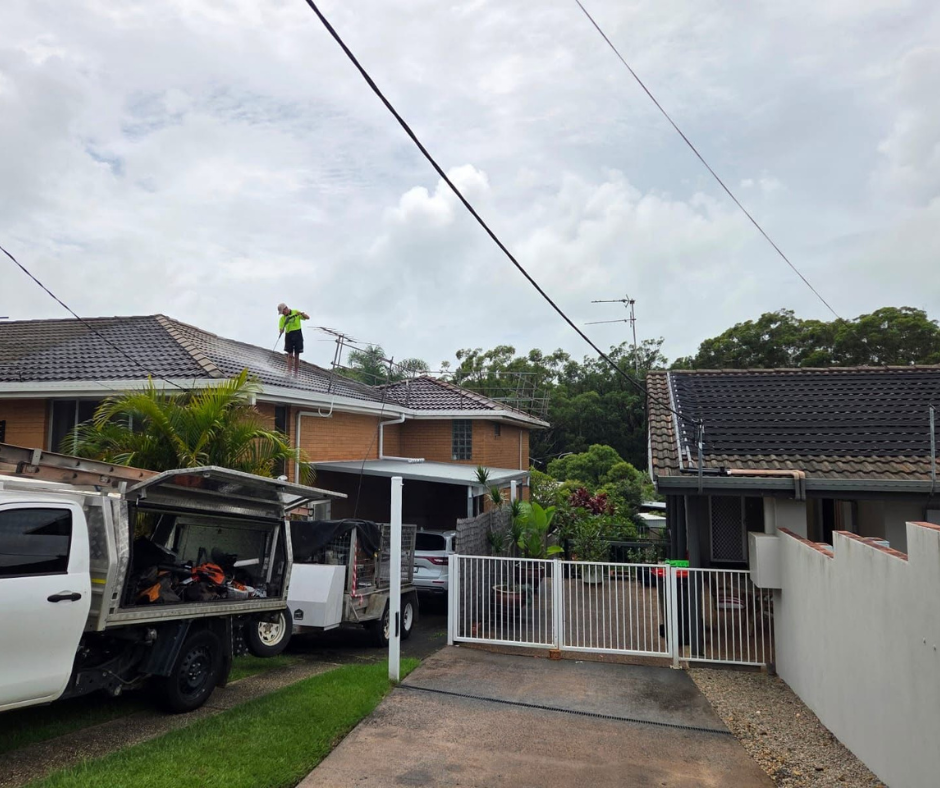
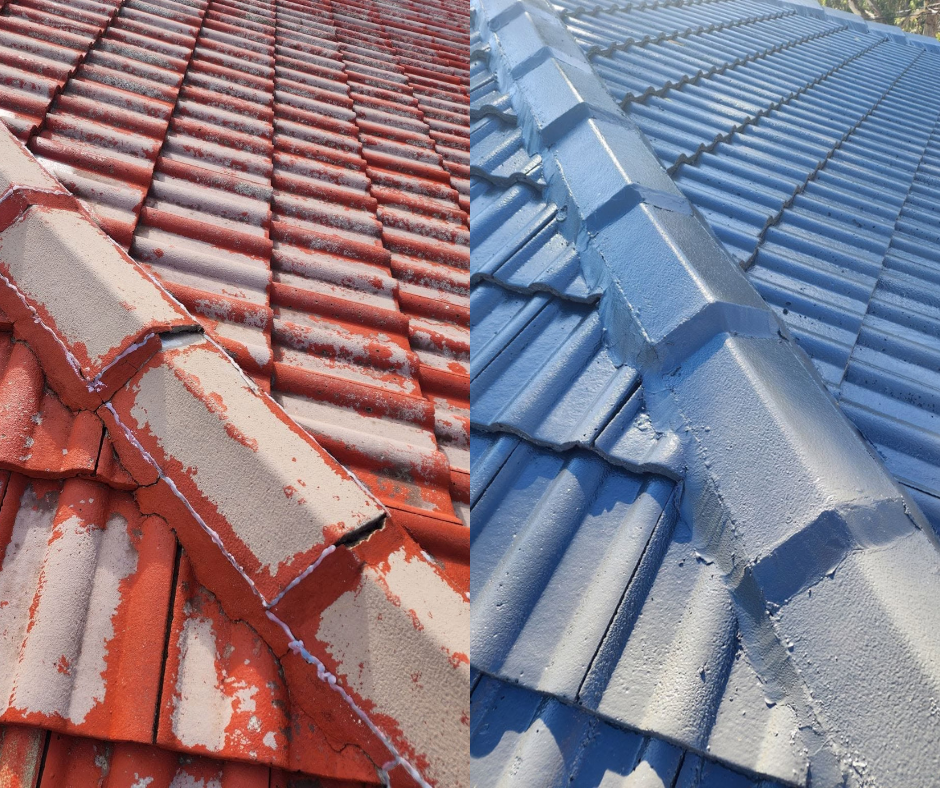
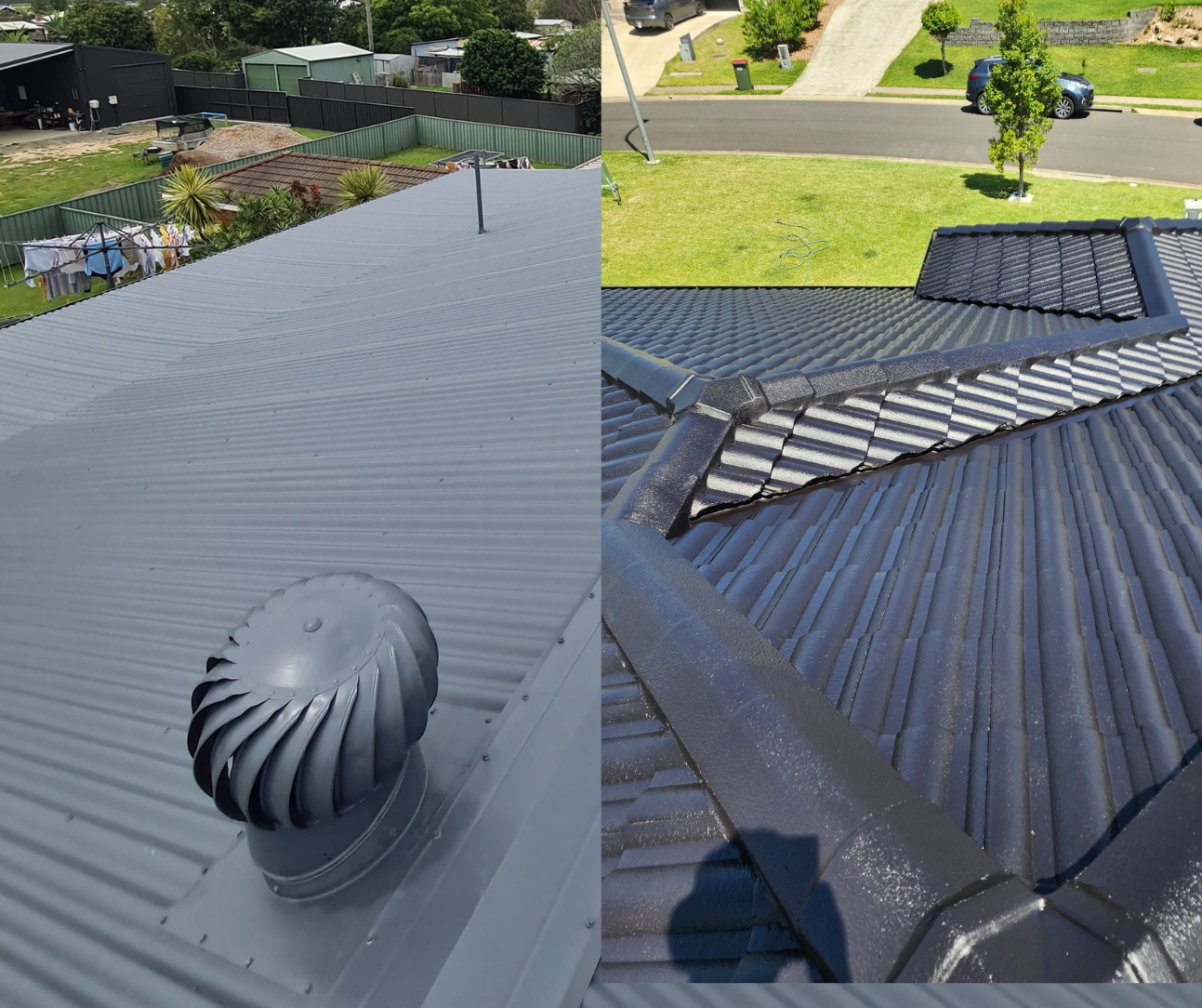
A restoration works with the roof you already have. Nothing comes off, and nothing gets replaced wholesale. The roof is inspected, cleaned back to a sound surface, repaired where it needs it, then sealed and recoated so the material is protected again.
- Inspection and photographs of every problem area
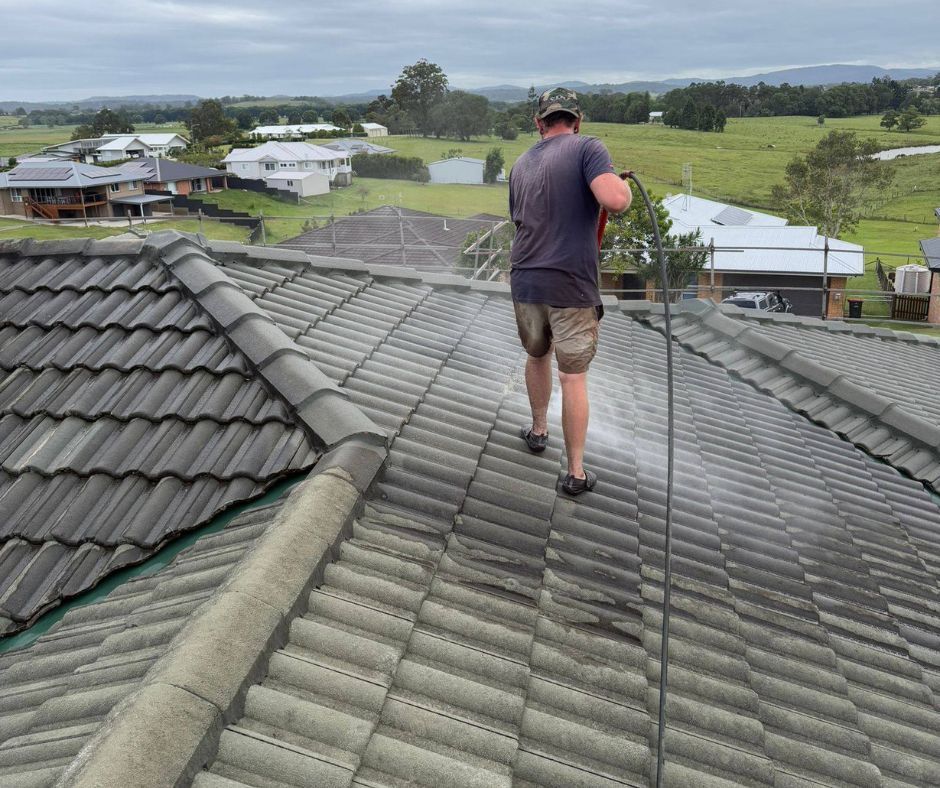
- High-pressure clean to strip lichen, moss, chalked paint and grime
- Repairs to cracked tiles, corroded screws, flashings and valleys
- Repointing on tile, rescrewing on metal
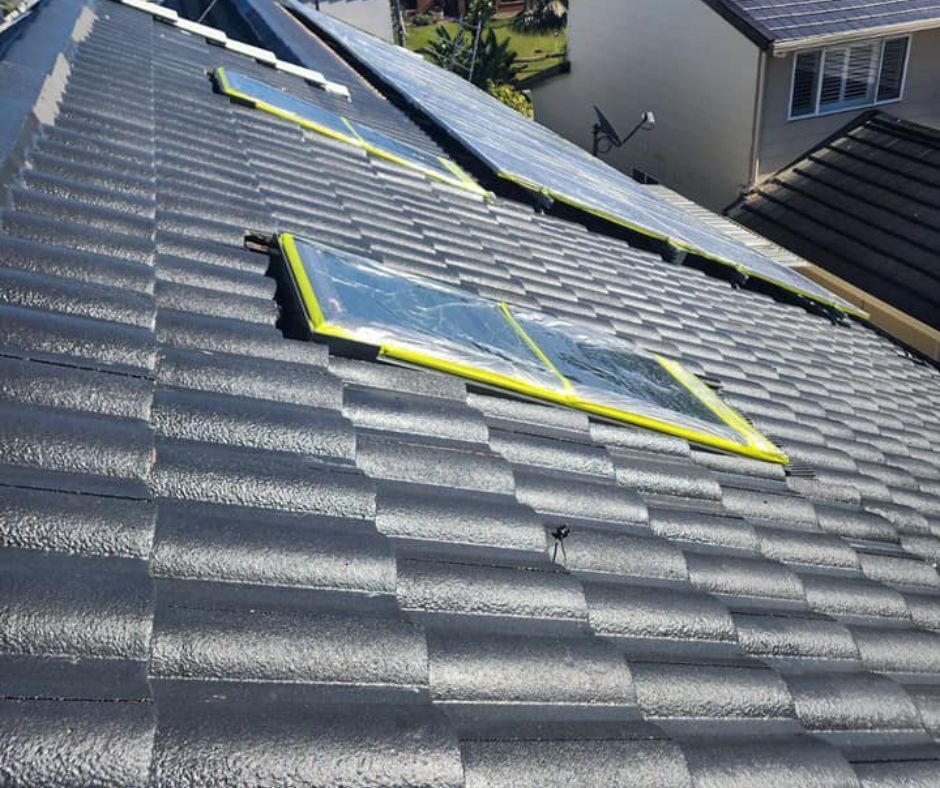
- Sealing, then the roof coating system built up in coats
On tile roofs, that mostly means repointing ridge caps and swapping out broken tiles. For metal sheets, it means treating rust, replacing fixings and sealing before any colour goes on. It is also the difference between a restoration and a repair. Patching one problem area deals with that spot and nothing else.
What a Roof Replacement Includes
A replacement is a different job entirely. The old roof comes off and goes in a skip. New sheets or tiles go on, usually with new flashings, often new battens, sometimes new sarking and guttering while everything is open.
That is where the cost gap comes from. You are paying for removal, disposal, a full set of new materials and a far longer labour program, not for a surface treatment.
It also buys something a restoration cannot. A new roof resets the clock completely and comes with fresh material warranties from the manufacturer. If a roof is genuinely finished, that is money well spent and nobody should be talking you out of it. The trade-off is the disruption. Expect more days on site, deliveries in the driveway, and a period where the house is open to the weather under nothing but sarking.
Roof Restoration vs Replacement at a Glance
| Restoration | Replacement | |
|---|---|---|
| The existing roof | Stays in place, cleaned, repaired and recoated | Removed entirely and disposed of |
| Cost | A fraction of a replacement on the same roof | The larger spend by a wide margin |
| Effect on the roof | Protects sound material and halts deterioration where it is | Resets the roof completely with new material |
| Time on site | Shorter, weather permitting | Longer, with more trades and deliveries |
| Disruption | Access and noise; house stays sealed | House is open to weather while the roof is off |
| Waste | Minimal; the existing material stays on the house | An entire roof goes to landfill or recycling |
| Warranty | Workmanship and coating warranty | New material warranties from the manufacturer |
| Best suited to | Sound roofs with surface problems | Roofs where the material itself has failed |
When a Roof Restoration is the Right Call
Most of the roofs we look at fall into this category. Good bones, tired surface. The material is still doing its job; it has just stopped looking after itself.
- Leaks confined to one or two known spots rather than appearing all over
- A limited number of cracked or slipped tiles
- Surface rust that has not gone through the sheet
- Faded, chalky or peeling coating
- Pointing that has crumbled at the ridges
- Roof lines still straight, with no sagging or dipping
Restoration will not turn old material into new material, and any roofer promising that is overselling it. What it does is protect what is still sound, halt the deterioration where it is, and put the roof back into a condition that can be maintained. There is a fair amount you can work out from the ground before booking anyone, and the warning signs worth watching for are more obvious than most people expect.
Tile Roofs That Suit Restoration
Cracked or slipped tiles in small numbers are routine, and so is the lichen and moss on the surface, which looks far worse than it is until the roof is cleaned back. What matters more is where the mortar has gone. Ridge capping deterioration along the ridges and hips is one of the most common faults we find on Mid North Coast tile roofs, and rebedding and repointing those caps is standard restoration work rather than a reason to pull the roof off.
Metal Roofs That Suit Restoration
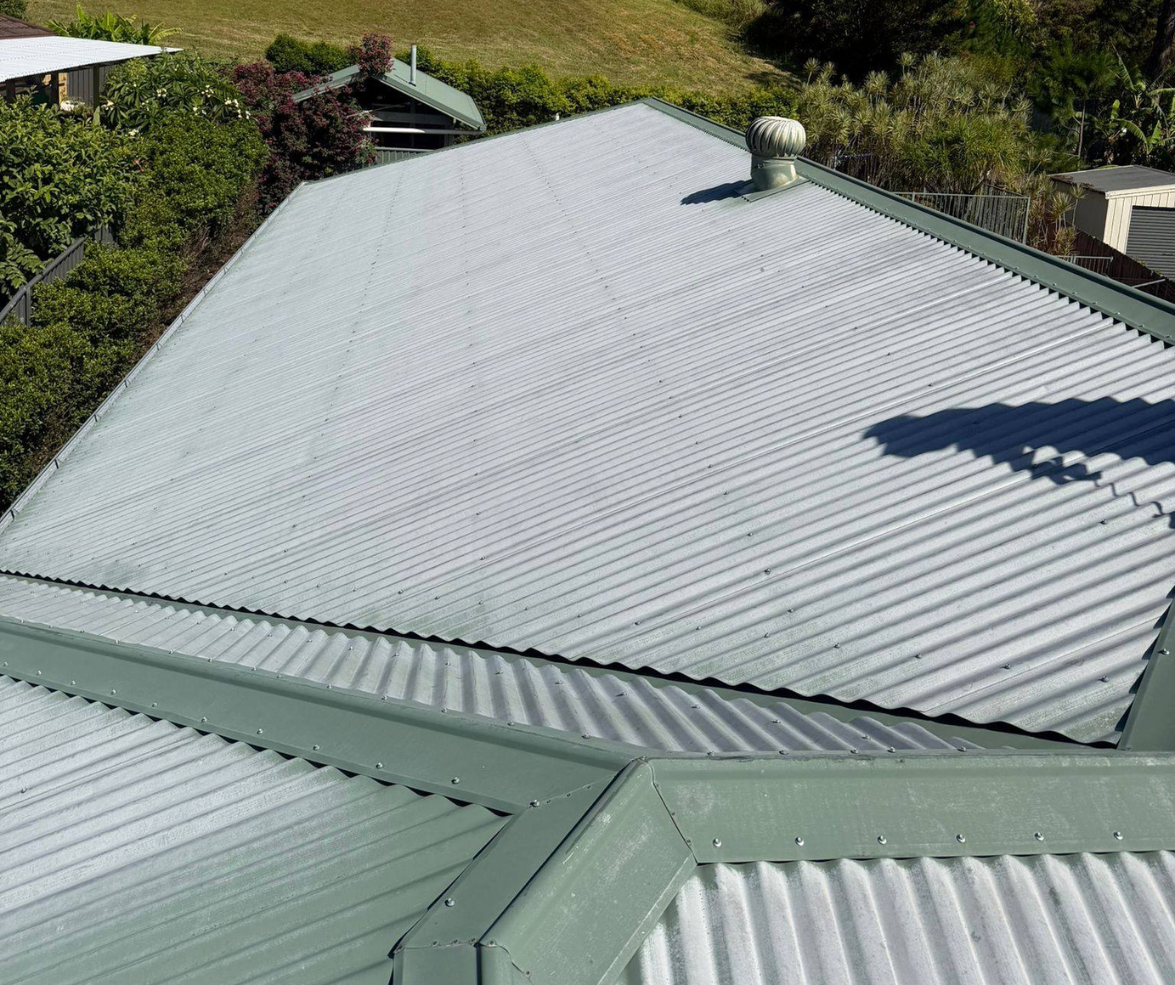
Chalky paint, corroded screws, sealant that has given up at the flashings, oxidation across the sheets. All normal for a metal roof that has been out in the weather a couple of decades, and all treatable. Early-stage rust is treatable too, provided it is still sitting on the surface. The difference between rust on the surface and rust that has eaten through is the most important thing to establish, and it is not always obvious from the ground.
When Replacement Is Genuinely the Better Option
Some roofs are past it, and coating one of those is a waste of your money. Roof painting buys appearance. It does not buy integrity, and it cannot put back material that has already failed.
When we walk a roof and start seeing these, the restoration vs new roof question has usually answered itself:
- Rust that has perforated the sheet, so there are holes rather than surface corrosion
- Leaks turning up in several different rooms rather than one known spot
- Sagging or dipping in the roof line, pointing at structural roof damage rather than the covering
- Failure spread across the whole roof instead of localised defects
- Ageing asbestos cement sheeting
- Sheets lifting because fasteners have failed across the roof, not just in one section
- Storm damage that has reached the framing
Asbestos deserves its own note. It turned up in Australian homes from the 1940s through to the late 1980s, and SafeWork NSW advises against ever using high-pressure water on asbestos products, warning as well that these roofs are brittle enough to fall through. A roof like that cannot be restored, because the cleaning stage alone is off the table.
There is a rough test the trade falls back on when a roof sits close to the line. Once the work a roof needs approaches something like 40% of what a new roof would cost, replacement is worth taking seriously. A rule of thumb rather than a rule, but a useful gut check.
What End of Life Looks Like on a Tile Roof
Tiles rarely announce themselves. They wear out quietly, and the signs are easy to miss from the driveway.
Tile porosity is the main one. Old concrete tiles gradually stop shedding water and start absorbing it, which makes the roof heavier, keeps it damp long after the rain stops, and accelerates everything else. Mortar breaking down across the entire roof rather than just at the ridges is another, as are tiles that crack underfoot during normal access.
Then there is the practical problem nobody mentions until it bites. Tile profiles get discontinued, so if a roof needs a significant number replaced, and the profile has not been made for decades, matching them can be impossible. A lot of the housing stock around Coffs Harbour and Port Macquarie is tiled and is now reaching exactly that age.
What End of Life Looks Like on a Metal Roof
On metal, the giveaway is pitting, small perforations scattered across the sheets rather than rust sitting on top of them. Rust working outward from underneath is worse again, because by the time it shows on the surface, the sheet is already thin. Old galvanised iron that has lost its coating, and roofs where fasteners have corroded away across the whole structure, are usually replacement territory too.
The Grey Zone: Restore Now, Replace Later
Not every roof lands cleanly on one side. Some are sound enough to restore while still heading toward the end of roof lifespan, and restoring now with a view to replacing later is a legitimate strategy. It buys time, protects the house in the meantime, and spreads the spend.
Two traps are worth knowing about. The first is solar. Where a roof is close to finished, putting panels on it means paying to have them removed and refitted when the roof eventually goes. Sorting the roof out first is far cheaper, and restoring a roof that already has panels installed brings complications of its own.
The second is repeated patching. One repair is a repair. A pattern of repairs in different parts of the roof over several years is the roof telling you something, and it is worth adding up what has already been spent before spending more. Looking after a roof properly makes a real difference to how long this decision can be deferred, though maintenance cannot rescue material that has run out.
What the Cost Difference Really Means Over Time
Most people compare the two numbers on the quotes. The better comparison is what each number buys.
A restoration done properly protects a sound roof for a long stretch. A restoration done on a roof that needed replacing buys a good-looking roof and the same problem again before long, at which point you pay for the replacement anyway. That is the expensive version of the cheap option.
Both sides swing on the same variables: roof size, pitch, access, material, condition, and how much repair work sits inside the scope. Which is why choosing between roof restoration or replacement on price alone is a mistake. That number comes from a written quote after your trusted roofer has assessed your roof.
One thing worth watching. Where a restoration quote lands dramatically below the others, the difference is rarely efficiency. It is prep, priming, or repairs quietly left out of the scope, and
what a restored roof does for the value of a property depends far more on the quality of that work than on anything saved at quoting.
How a Proper Roof Inspection Settles It
The whole restoration vs new roof decision hangs on what is actually up there, and that cannot be assessed from the ground.
What a Proper Assessment Covers
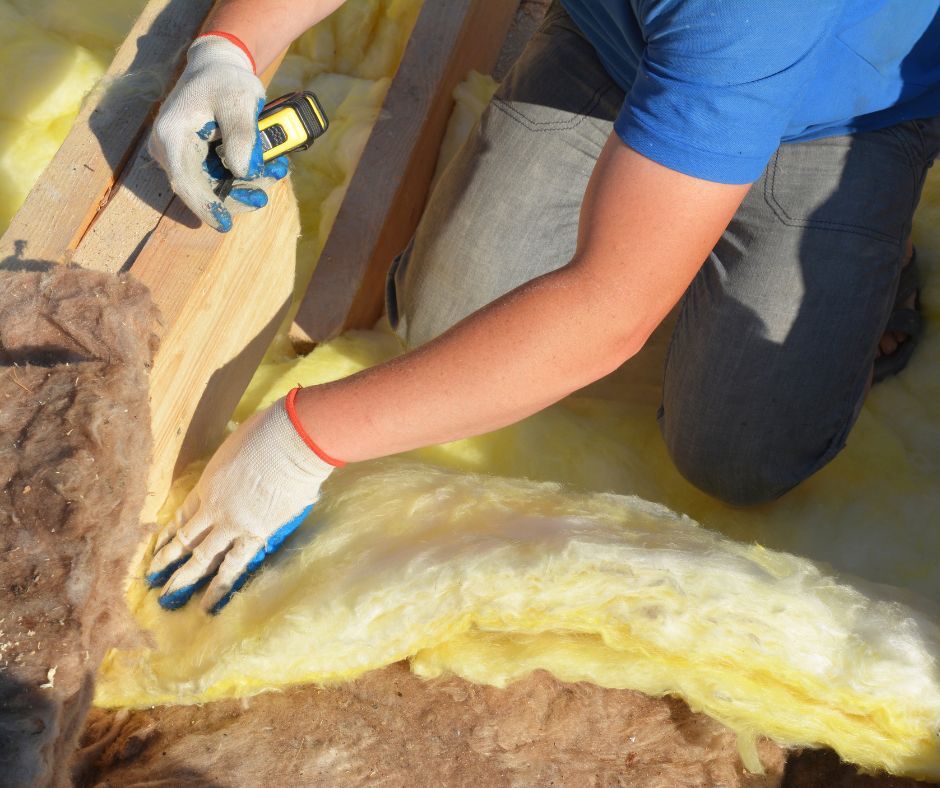
A real look at a roof takes in the covering, the flashings, every penetration, the valleys, the gutters, and where the water goes when it rains hard. If there is safe access, you also need to assess the roof space underneath, because that is where the honest evidence sits. Moisture staining on the timbers, damaged battens, daylight through gaps. None of that is visible from on top, and all of it changes the answer.
What to Do When Two Quotes Disagree
When two quotes disagree, put the same three questions to each trade:
- Ask them to point at the evidence rather than describe it.
- Ask what happens if you choose the other option, and why they would advise against it.
- Ask what the recommendation is based on, because "roofs this age usually need replacing" is a generalisation, not an assessment of your roof.
A defensible recommendation looks the same whichever way it lands: photographs taken on the roof, a written roof inspection report, and reasoning tied to what is actually on your house.
The questions worth asking before signing anything will separate a considered recommendation from a sales pitch fairly quickly.
What You Should Walk Away With
A clear picture of the roof's condition, what the work includes and, just as importantly, what it does not include, and a straight answer on the risk you carry if you take the cheaper path.
Our roof assessment is free, and we do it properly. On the roof, photographs of every problem area, a walk-through of what we found, then a transparent written quote. Dave and Jake handle every job themselves with no subcontractors, so the person who assessed your roof is the person who works on it, backed by 34 years in the trade and a 10-year written warranty.
Simplifying Your Restoration vs New Roof Decision
Strip it back, and the decision comes down to one question. Is this a surface problem or a structural one? Surface problems restore well. Structural problems do not, and no coating will change that.
If you arrived here suspecting you were being upsold, you now have a way to check. Ask to see the evidence, and ask what the recommendation is based on. Where the answers come with photographs and specifics about your roof, they are probably sound. Where they come with generalisations about roofs of a certain age, keep asking.
Booking a free roof assessment costs nothing, and at worst it gives you a second, documented opinion.
Key Takeaways
- The test is simple. Restore when the problems sit on the surface, and the structure is sound; replace when the material itself has failed.
- A restoration protects what is still good and halts deterioration where it is. It does not turn old material into new material.
- Rust through the sheet, leaks in several rooms, sagging roof lines and widespread material failure all point toward replacement.
- Compare what each option buys, not just the two numbers. A coating on a roof that needed replacing means paying twice.
- Nobody can answer this from the ground. Photographs, a written report and reasoning specific to your roof are what a real recommendation looks like.
Frequently Asked Questions
Is a roof restoration cheaper than a full roof replacement?
Yes, and by a wide margin, because the existing roof stays where it is. There is no removal, no disposal and no new material to buy, so you are paying for labour, repairs and coating rather than a whole new roof. That saving is only real if the roof is a genuine restoration candidate, though, because restoring a roof that needed replacing means paying for the coating and then the replacement anyway.
How much longer will my roof last after a restoration?
There is no honest single answer, and anyone offering a specific number without seeing the roof is guessing. It depends on the condition the roof is in beforehand, the material, how thoroughly the preparation was done, and how exposed the house is to salt and weather. What we can put in writing is the warranty, and every job we do carries a 10-year written warranty on workmanship and paint. What that warranty covers is worth understanding before you compare quotes.
How will I know if my roof is too far gone to restore?
The clearest signs are rust that has gone through the sheet, leaks appearing in several parts of the house, sagging in the roof line, and failure spread across the whole roof rather than one or two spots. Any of those, and restoration is unlikely to be the right answer. None are reliably visible from the ground, which is why the answer comes from a thorough assessment and an inspection report that follows it, not from an opinion offered in the driveway.
Do I need a new roof or restoration if my roof keeps leaking?
It depends where the leaks are. One recurring leak in a known spot, usually at a flashing, valley or penetration, is a repair, and it sits inside a normal restoration. Leaks turning up in several different rooms are a different story, because that pattern usually means the covering has failed broadly rather than in one place. Keep track of which rooms and when, because that history tells a roofer more than the stains themselves.
Should I replace my roof before selling my house?
Almost never. A replacement is a large spend at precisely the point you are trying to net as much as possible from the sale, whereas a restoration transforms how the house presents for a fraction of it. Buyers respond to a roof that looks cared for, and a documented recent restoration answers a question they were going to ask anyway, which is what makes it worthwhile for property value as pre-sale work.
Can you restore a roof that has already rusted through?
No. A coating sits on top of the steel, so it needs sound steel underneath to bond to and protect. Once rust has perforated the sheet, there is nothing left to coat, and paint over holes is just paint over holes. Surface rust is a different matter and gets treated as routine restoration work, provided the sheet is still solid.
How old is too old for a roof restoration?
Age on its own does not decide it. Condition does. A well-maintained older roof can be a far better restoration candidate than a newer one that has been ignored, particularly near the coast where neglect compounds quickly. We have restored roofs that owners had already written off, and advised against restoring roofs that looked perfectly fine from the street.
Should I replace my roof before installing solar panels?
If the roof is near the end of its life, doing the roof work first is the cheaper path by a long way, because panels have to come off and go back on when the roof is eventually replaced. Where the roof still has years left in it, restoring it before the panels go on is the sensible order of things. Restoring a roof with panels already fitted is possible, but it adds cost and complexity easily avoided by doing things in the right order.
Does ColourMe Painting Roof Restoration do roof replacements?
No. We do restorations only, and repairs form part of a restoration rather than a standalone service. If a roof is past restoring, we will say so at the assessment, and you are better off putting that money toward a replacement with someone who does that work.
Can a roofer tell me which option I need without getting on the roof?
No, and be cautious of anyone who offers to. Surface rust and perforation look similar from below, sound and crumbling pointing look almost identical, and the roof space where the most useful evidence sits is invisible from outside altogether. Expect to be shown photographs of your own roof, not a general explanation of roofs.
Let’s talk about your project
Fill out the form, or call us to arrange a free roof assessment and written quote
Home Page Form