Blog
You look up at your roof one afternoon, and something catches your eye. The colour looks a little washed out. A little flatter than you remember. Maybe there is a chalky residue where there used to be a clean, crisp finish. If this sounds familiar, you are not imagining things. Does Colorbond fade? Yes — over time, it does. But that is only part of the answer, and the full picture is a lot more reassuring than most homeowners expect.
Colorbond is one of the toughest roofing materials available in Australia, and it is engineered to hold its colour far better than most alternatives. The difference between a roof that fades gracefully and one that deteriorates rapidly comes down to a few specific factors. Some you can control, some you cannot. Understanding them is the first step to knowing where your roof actually stands.
Does Colorbond Fade? Yes, But Here Is What That Actually Means for Your Home
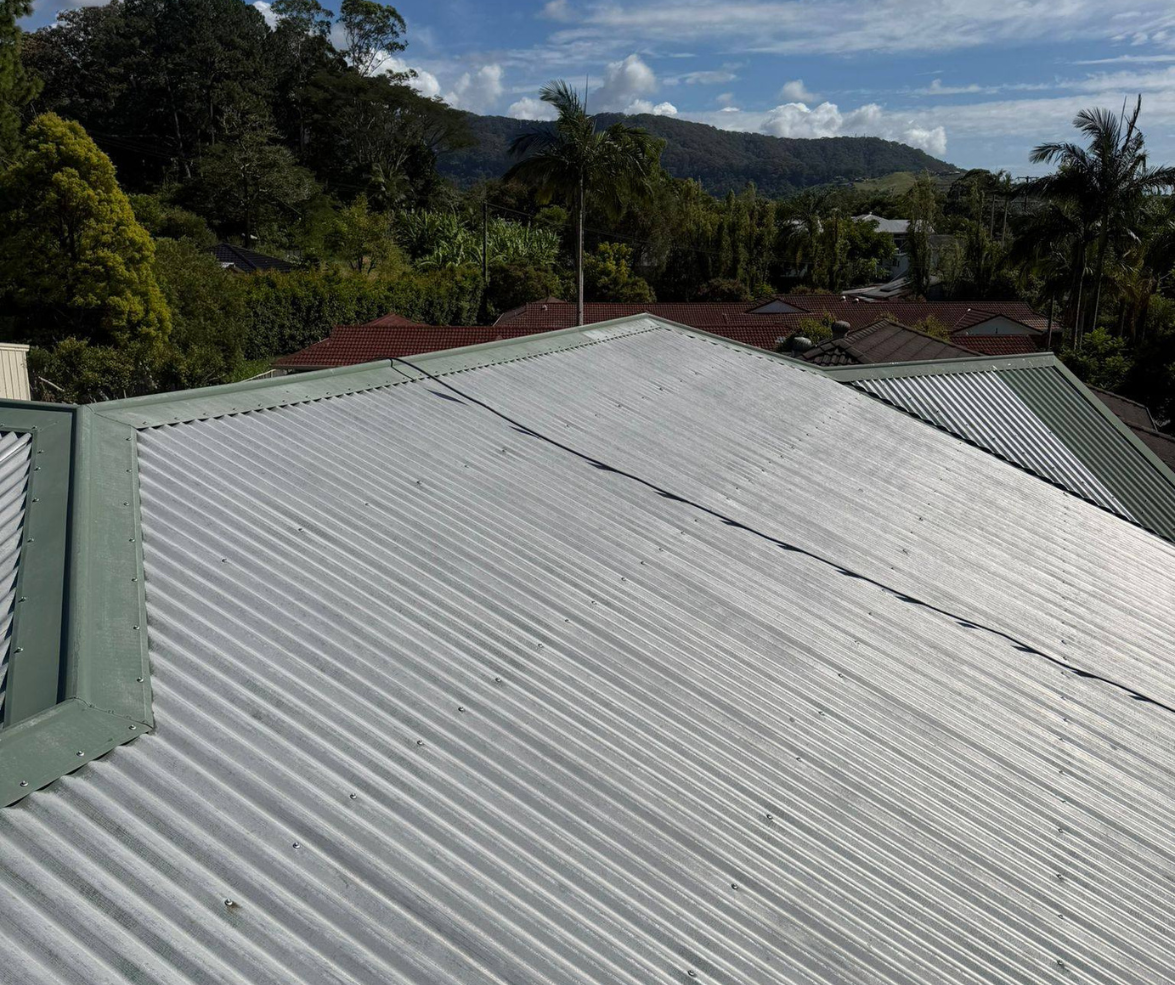
Colorbond steel does fade over time. That is the honest, straightforward answer. What it does not do is peel, crack, or crumble. The steel substrate typically remains structurally sound long after the first signs of cosmetic colour change appear. What you are seeing when a Colorbond roof looks dull or washed out is the gradual breakdown of the factory-applied paint topcoat, not the failure of the steel itself.
At ColourMe Painting Roof Restoration, we restore Colorbond roofs across Coffs Harbour and the mid North Coast regularly. What we see up on those roofs tells a more complete story than any spec sheet. Fading on a coastal roof in Coffs Harbour looks different from fading on an inland roof in western NSW. It happens faster, it is less even, and the contributing factors are more aggressive. Colorbond colour retention is genuinely impressive given what these roofs are up against, but nothing is immune to time and the elements.
The key distinction to understand in Colorbond roof fading: gradual colour change is cosmetic. It does not mean your roof is failing structurally. It does mean that without action, the coating will continue to degrade until the steel underneath is eventually exposed, and at that point, the conversation shifts from restoration to something more serious.
Why Do Colorbond Roofs Fade
To understand why Colorbond fades, it helps to understand what you are actually looking at. Colorbond is not simply painted metal. It is a multi-layer system: a steel base, a metallic alloy coating for corrosion resistance, a conversion layer to improve adhesion, a baked-on primer, and finally a baked-on exterior-grade topcoat. It is that topcoat that gives Colorbond its colour, and it is that topcoat that weathers over time.
UV Radiation
This is the primary driver of UV damage to roof paint in Australia. Our UV index is among the highest in the world, and in subtropical coastal regions like Coffs Harbour, UV exposure is intense year-round with very little seasonal let-up. UV radiation progressively breaks down the pigment molecules in the topcoat and degrades the resin that holds the paint film together. The result is gradual colour loss and, eventually, the chalky residue that appears on the surface as the binder breaks down.
This cause cannot be prevented. It is physics. What can be managed is the rate at which it progresses.
Heat and Thermal Cycling
Metal expands as it heats up and contracts as it cools overnight. On a Colorbond roof, this daily thermal cycling creates tiny but real mechanical stress in the paint film across decades of use. Over the years, those micro-movements can lead to fine surface cracking that allows moisture to get under the coating, which accelerates further degradation from below as well as above.
Coastal Salt Air and Humidity
This one matters enormously for anyone on the mid North Coast of NSW. Salt particles carried in the sea breeze settle on the roof surface and react with the paint coating, accelerating oxidation and discolouration. Combined with the high humidity typical of a subtropical coastal climate, this creates a significantly harsher environment than what an inland roof faces. A Colorbond roof in Coffs Harbour is working harder than the exact same product installed in Tamworth or Orange.
It is worth understanding this specifically: most of the content published about Colorbond fading is written with Melbourne or generic "Australian conditions" in mind. The reality for homeowners between Grafton and South West Rocks is that the coastal and subtropical conditions here accelerate the timeline. Planning around that reality is what separates a well-maintained roof from a neglected one.
Maintenance Neglect and Grime Build-Up
Organic matter, bird droppings, leaf debris, and atmospheric grime that accumulate on the roof surface do not just look untidy. They hold moisture against the coating and create localised conditions that are more corrosive than the open air. Areas that rainfall does not naturally reach, such as under eaves, behind parapet walls, and in sheltered valleys, tend to accumulate this build-up faster and show accelerated or uneven fading as a result.
What Affects How Fast a Colorbond Roof Fades
Not all Colorbond roofs fade at the same rate. These are the key variables.
Colour Choice
The colour you choose, or the colour that was already on your roof when you bought the house, has a real impact on how visible fading becomes over time.
| Colour Tone | UV and Heat Absorption | Fading Visibility Risk |
|---|---|---|
| Light and reflective (Surfmist, Shale Grey, Classic Cream) | Low | Low |
| Mid-tone (Dune, Paperbark, Windspray) | Medium | Medium |
| Dark and absorptive (Monument, Ironstone, Deep Ocean) | High | High |
Darker colours absorb more UV radiation and heat, which accelerates pigment breakdown, and because the original colour is deeper, even moderate fading creates a more obvious visual shift. Lighter, reflective colours show less visible colour change over the same period and also reflect more heat back off the roof, which helps with the home's thermal performance as a secondary benefit.
Roof Orientation
North-facing and west-facing roof surfaces receive the most direct sun across the day and will always show more fading than south-facing or shaded areas. On older roofs, you often see a clear visual difference between panels on different elevations, with the north face looking noticeably lighter than the south. This uneven fading is one of the most telling signs that restoration is getting close.
Location and Climate
As discussed above, coastal and subtropical locations accelerate fading compared to inland areas. It is one of the biggest factors in how quickly a roof moves from "fading gently" to "needs attention." Homeowners should factor this into their maintenance planning and not use timelines written for drier or southern climates as their guide.
Quality of Original Installation
A correctly installed Colorbond roof with its factory coatings intact and no surface damage will hold colour significantly longer than one where the coating was scratched during installation, swarf from metal cutting contaminated the surface, or joints were left unsealed. This is part of why the quality of the tradesperson matters, not just the quality of the material. It is also why ColourMe does not sub-contract its work. The person who quotes your job is the person who gets on your roof.
How to Tell If Your Colorbond Roof Is Fading
Knowing what to look for before you call anyone is useful. These are the signs worth knowing.
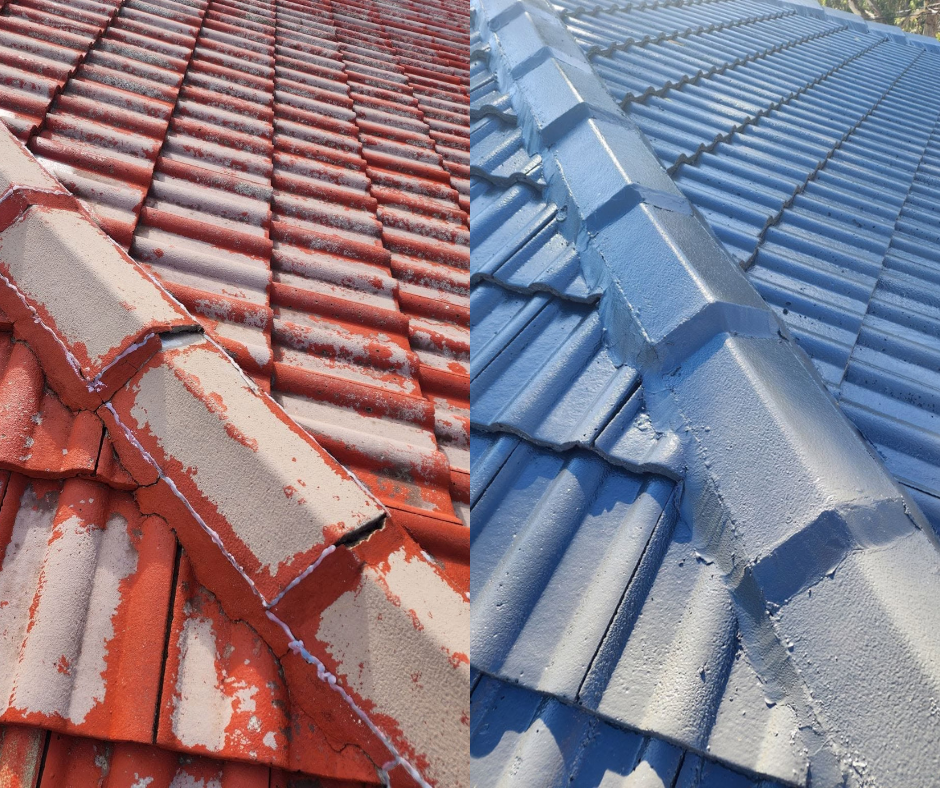
Chalking. This is often the first indicator. Run a finger across the roof surface. If it comes away with a white, dusty residue, Colorbond chalking is underway. The binder in the topcoat is breaking down, and those degraded particles are surfacing as a powdery film. It is a reliable early warning.
Patchy or uneven colour. Sections of the roof exposed to direct sun appear visibly lighter than shaded areas. On a roof with mixed orientations, this can be quite pronounced. The north elevation looks almost a different shade from the south.
Loss of sheen. The original Colorbond finish has a clean, low-sheen appearance. When that has gone flat and dull, the topcoat has lost its integrity. The surface looks chalky and matte rather than crisp.
Colour mismatch against gutters and fascia. When the roof colour has shifted enough that it no longer looks like it belongs with the original gutters and fascia, fading is well advanced. This is something that becomes obvious from the street.
Rust staining. This is an advanced sign, not an early one. It indicates the paint film has broken down enough to expose the steel substrate in places. At this stage, you are no longer in purely cosmetic territory. Our post on roof corrosion covers what to watch for and when it becomes urgent.
What we see on coastal roofs.
When Dave and Jake do a free assessment on a Coffs Harbour roof, the first thing they look for is how evenly the surface is weathering. Uneven fading, where one section looks years older than another, almost always points to a combination of orientation, a section that is not getting rain-washed, or a spot where a previous repair or installation issue has compromised the coating. A roof that is fading evenly is usually in better shape than it looks. A roof with patches is a different conversation.
Does Colorbond Roof Fading Affect Your Warranty?
The questions “Do Colorbond roofs fade?” and “Does it affect my warranty?” come up often, which is why it deserves a straight answer, because the answer surprises many homeowners.
BlueScope's warranty for Colorbond roofing covers two things: corrosion to perforation of the steel, and paint flaking or peeling. What it does not cover is cosmetic colour change. BlueScope's own warranty documentation states that normal weathering, which includes natural reduction in paint gloss and a natural colour change of the paint finish, is not covered by this warranty.
That means the gradual fading and chalking you see on an ageing Colorbond roof is considered a normal and expected outcome of weathering, not a product defect. Claiming on your BlueScope warranty for colour fade will not be successful.
However, there is an important distinction. If fading has progressed to the point where the paint system is actually flaking or peeling (delaminating from the steel surface rather than simply losing colour and gloss), that is a different situation. Paint adhesion failure is covered under warranty terms, and a licensed inspection can determine whether that threshold has been reached. If you suspect your roof is beyond normal weathering, it is worth having it assessed properly before writing off a potential warranty claim.
For more on how roofing warranties work in practice, our post on understanding and maximising your roof restoration warranty is a useful read.
Can a Faded Colorbond Roof Be Restored?
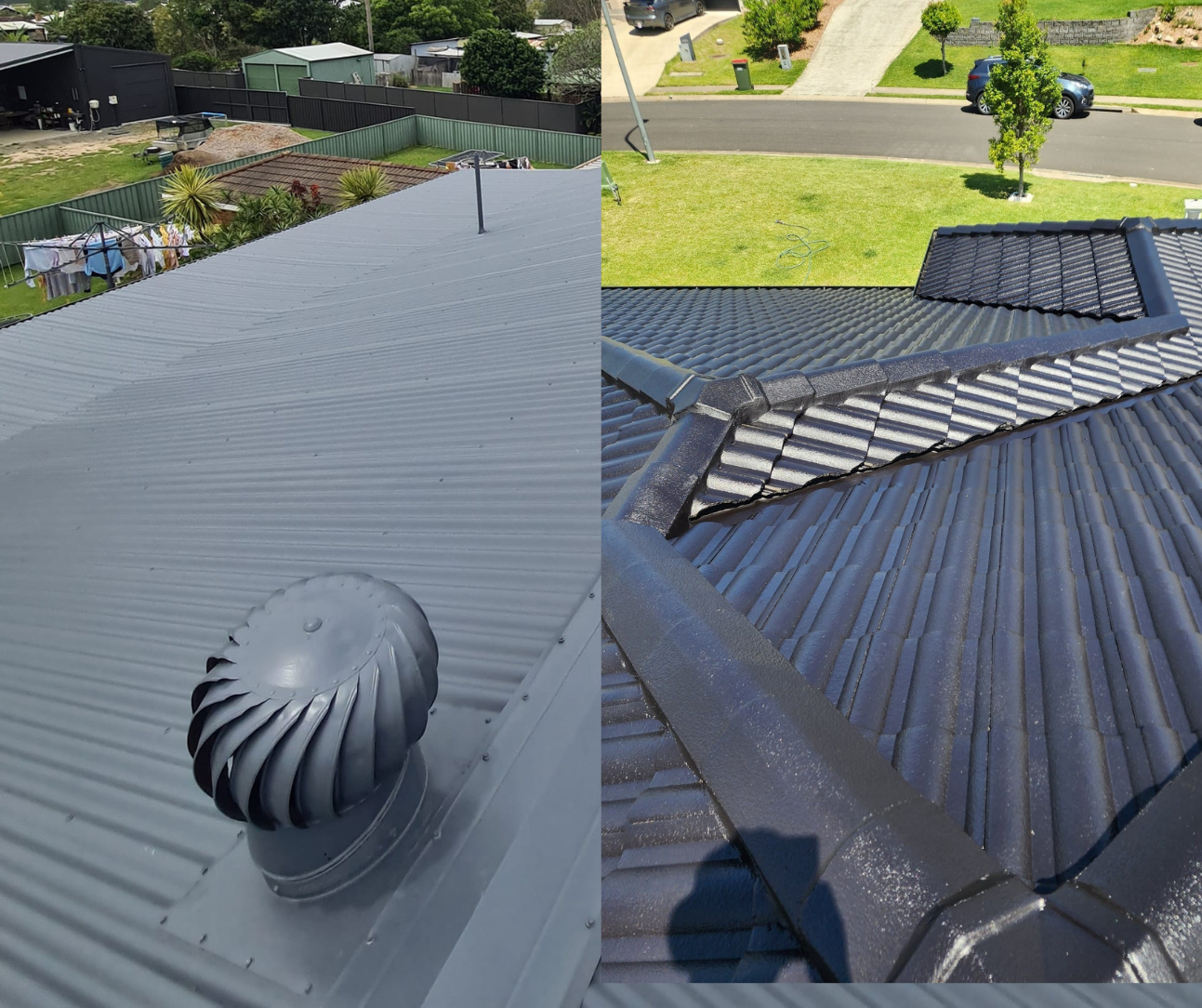
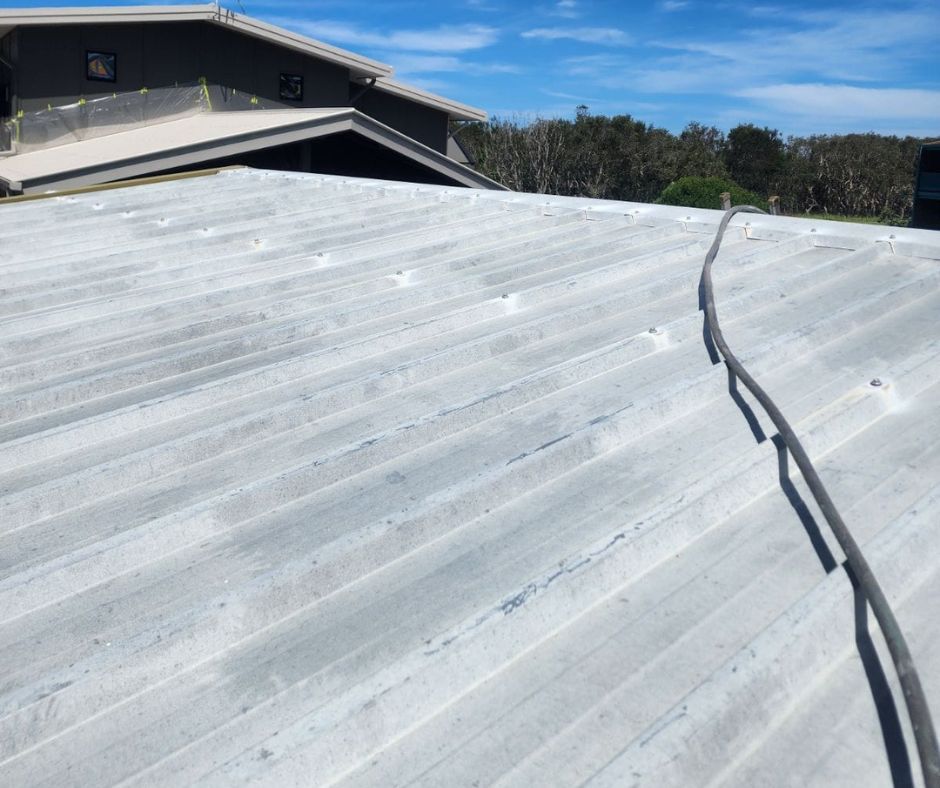
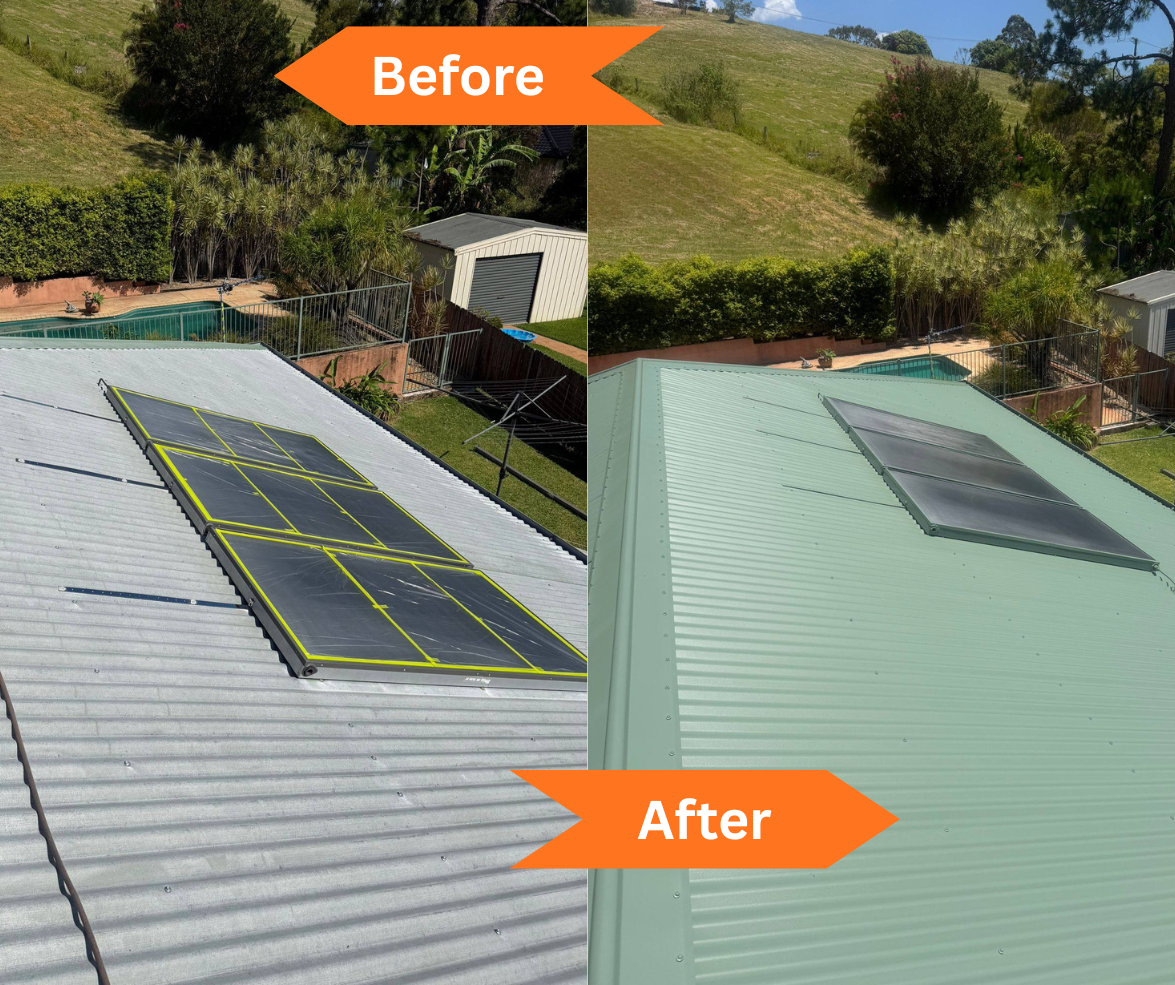
In most cases, yes. A faded Colorbond roof that is structurally sound can be professionally cleaned, prepared, and repainted to restore its colour and extend its useful life significantly. Our detailed guide to painting a Colorbond roof covers what is involved in depth, but here is the overview.
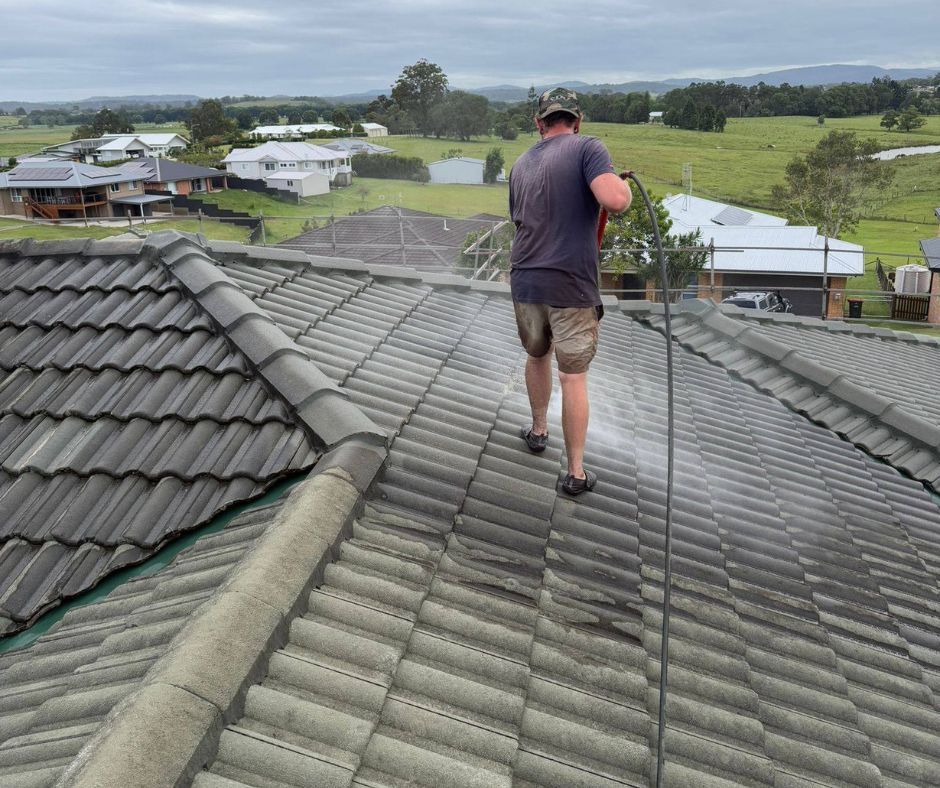
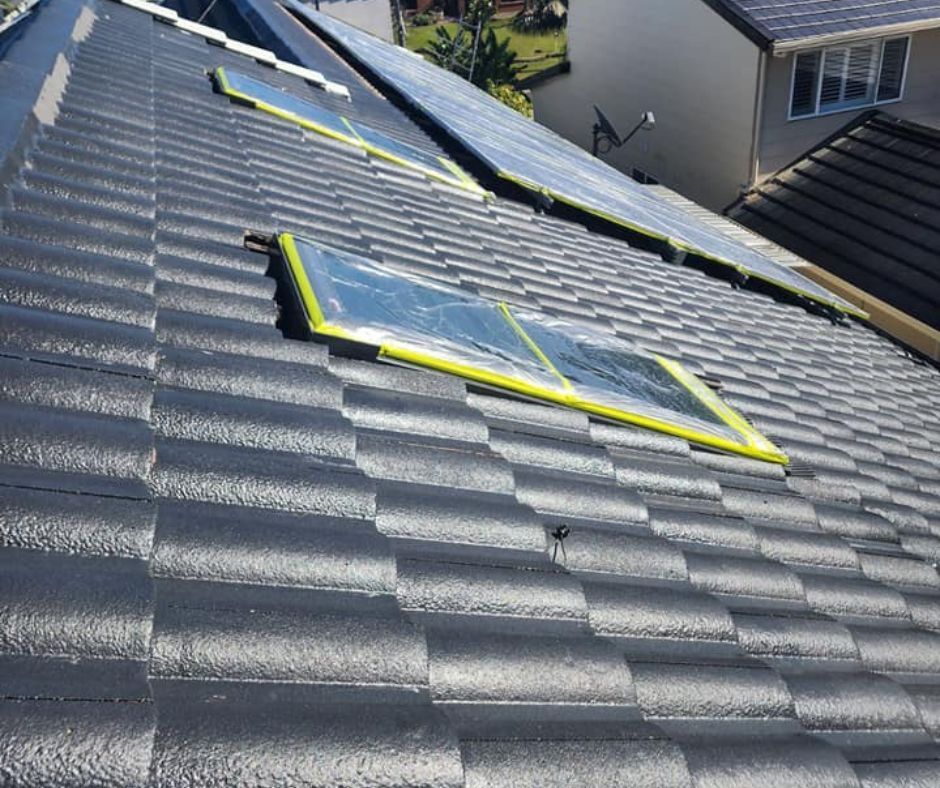
A proper Colorbond roof restoration starts well before any paint touches the surface. High-pressure cleaning removes the chalk, salt residue, grime, and organic build-up that has accumulated on the coating. Any rust spots, surface damage, or failed sealant is treated and repaired. A primer is applied where needed to ensure proper adhesion on surfaces where the original coating has degraded. Only then is the new topcoat applied, typically a two-coat system using a quality Colorbond-compatible roofing paint.
Done properly, a restored Colorbond roof can be expected to hold its new colour for another ten to fifteen years. ColourMe backs its workmanship and paint with a 10-year written warranty, which is also your formal record of the work completed.
This is not a job that suits the DIY approach. Working safely on a metal roof requires Working at Heights certification (both Dave and Jake hold this certification), and the surface preparation is where inexperienced operators consistently fall short. Poor prep leads to poor adhesion, and a paint job that peels within a couple of years is worse than no paint job at all.
Is Restoration Right for My Roof? Three Questions to Ask
Before calling anyone, these three questions will give you a good first read on where your roof stands.
- Is the roof structurally sound? No widespread leaks, no sagging, no panels lifting. If yes, restoration is on the table.
- Is the fading cosmetic rather than structural? Chalking, colour loss, and dullness are cosmetic. Widespread rust-through or large areas of delaminating paint are structural concerns.
- Is the roof under 25 to 30 years old? For most roofs in this range that pass the first two questions, restoration is almost always a significantly better value than full replacement.
If you answered yes to all three, a professional assessment will almost certainly confirm that restoration is the right path. Our post comparing roof restoration vs. replacement goes into this decision in more detail if you want to think it through further.
How to Slow Down Colorbond Roof Fading
None of these tips will stop fading entirely. Time and UV radiation cannot be switched off. But they make a real difference to the rate, and they are the habits that separate roofs that look great at 20 years from roofs that look tired at 12.
Get it cleaned professionally. In normal conditions, once a year is the right frequency. In coastal areas like Coffs Harbour, every six months is better. A professional roof cleaning service removes the salt, grime, and organic matter that sit on the coating and create localised corrosive conditions. Low-pressure washing with appropriate cleaning solutions is the right approach. High-pressure blasting can strip the topcoat and accelerate the very fading you are trying to prevent.
Hose down areas that rain does not reach. Areas not washed by natural rainfall accumulate build-up faster and are at higher risk of accelerated weathering. Under eaves, behind parapet walls, and in sheltered valleys all fall into this category. A periodic hose-down keeps these areas even with the rest of the roof.
Keep gutters clear. Blocked gutters cause water to pool and back up against the roof edges and joints. That sitting water is corrosive, and the coating at the edges is where problems start. Clearing gutters at least twice a year is simple and effective.
Get an annual inspection. Having someone knowledgeable get up on your roof once a year to check for scratches, unsealed penetrations, failing sealant around vents and skylights, and any early signs of corrosion is far less expensive than dealing with the consequences of catching those things late. Our sun-damaged roof prevention guide has more on what to look for through the seasons.
Stay away from harsh chemicals. Bleach, strong solvents, and abrasive cleaners strip the protective topcoat. They are not a shortcut to a cleaner roof — they are a shortcut to a faster-fading one.
Summary
Colorbond is one of the most durable roofing materials available in Australia, and the fact that it fades over time is a feature of normal weathering, not a sign that something has gone wrong. The steel underneath typically outlasts the cosmetic surface by a significant margin. What matters is knowing what to watch for, staying on top of maintenance, and recognising when a faded roof has reached the point where professional restoration is the right call.
If your Colorbond roof is starting to look dull, chalky, or washed out and you are not sure what to do next, ColourMe Painting Roof Restoration offers a free roof assessment and written quote across
Coffs Harbour and
Port Macquarie. Dave and Jake will come out, get up on the roof, show you exactly what they find, and give you an honest answer with no pressure and no hidden fees.
Get in touch or call 0402 78 78 45.
Key Takeaways
- Colorbond steel does fade over time, primarily due to UV radiation, thermal cycling, and coastal salt exposure, but it is far more colourfast than most other roofing materials, and the steel substrate typically remains structurally sound long after surface fading begins
- Darker Colorbond colours absorb more UV and heat and show fading more visibly than lighter, reflective shades like Surfmist or Shale Grey
- Chalking, a powdery white residue on the surface, is one of the earliest and most reliable signs that the topcoat is degrading and restoration should be considered
- BlueScope's warranty covers corrosion and paint adhesion failure, not cosmetic colour fading or gloss reduction, which are treated as normal weathering outcomes
- A structurally sound faded Colorbond roof can almost always be professionally restored rather than replaced, extending its serviceable life by ten to fifteen years
- Regular professional cleaning (every 6 to 12 months, depending on location), annual inspections, and keeping gutters clear slow fading significantly and catch surface issues before they become structural ones
Frequently Asked Questions
1. Does Colorbond actually fade or does it just look dirty?
Both are possible. A build-up of dirt, grime, algae, and atmospheric deposits can make a roof look dull and prematurely aged, and a professional clean often reveals a surface in far better shape than it appeared. True fading is a different thing. It is UV-driven pigment breakdown in the topcoat, and the result is permanent colour loss and chalking that does not wash away. If cleaning restores the colour, it was never really fading. If it does not, you are looking at genuine topcoat degradation.
2. How long before a Colorbond roof starts to show fading?
In typical inland Australian conditions, most Colorbond roofs begin to show some degree of visible fading between ten and fifteen years after installation. In coastal and subtropical environments like Coffs Harbour, the combination of salt air, high UV, and humidity can bring that timeline forward. Roofs on the north elevation and in areas that do not get rain-washed regularly tend to show signs earlier than others on the same property.
3. Which Colorbond colours fade the fastest?
Darker shades, such as Monument, Ironstone, Deep Ocean, and similar, absorb more UV radiation and heat, which accelerates pigment breakdown. The colour shift is also more visually obvious from a deeper starting point. Lighter, reflective colours like Surfmist, Shale Grey, and Classic Cream tend to show less visible fading over the same period and are a worthwhile consideration for anyone in a high-UV coastal location.
4. What is Colorbond chalking, and should I be worried?
Colorbond chalking is a powdery white residue that forms on the surface as the paint binder breaks down under UV exposure. It is one of the earliest and most reliably visible signs of topcoat degradation. It does not mean the roof is failing structurally. The steel underneath is almost certainly fine, but it is a clear signal that the protective coating is approaching the end of its effective life, and restoration should be on your planning horizon.
5. Is Colorbond roof fading covered by the BlueScope warranty?
No. BlueScope's warranty covers corrosion to perforation of the steel and paint flaking or peeling (delamination). It explicitly excludes normal weathering, which includes natural reduction in paint gloss and colour change. Cosmetic fading is expected over the life of the product and is not a warranty claim. If the paint system is physically flaking or peeling off the steel, that is a different situation and may be covered. A licensed inspection can assess whether that threshold has been reached.
6. Can a faded Colorbond roof be repainted and restored?
Yes, in most cases. A faded Colorbond roof that is structurally intact can be professionally cleaned, prepared, and repainted to restore its colour and extend its useful life by ten to fifteen years or more. The quality of the surface preparation is the most important factor in whether the new coating holds. A rushed or poorly prepared job will fail early, and a thorough one will last. ColourMe backs its restoration work with a 10-year written warranty on workmanship and paint.
7. Is a faded Colorbond roof still waterproof?
Early-stage fading, such as chalking and colour loss, is primarily cosmetic and does not affect waterproofing. The steel and its protective metallic coating remain intact. If fading has progressed to the point where the paint film has broken down enough to expose the steel substrate across meaningful areas, corrosion can follow, and at that stage, waterproofing integrity can eventually be compromised if left untreated. This is why catching things early matters.
8. Can I use a high-pressure washer to clean my Colorbond roof?
It is not recommended. High-pressure cleaning can strip the topcoat and actually accelerate the fading process. Low-pressure washing with cleaning solutions appropriate for Colorbond surfaces is the right approach. Beyond the product care issue, working on a roof without the correct height safety equipment and training carries serious personal safety risks. Professional cleaning is the better option on both counts.
9. Should I restore my faded Colorbond roof or replace it entirely?
For most roofs under 25 to 30 years old that are structurally sound and showing primarily cosmetic fading, restoration is far more cost-effective than full replacement. Replacement becomes necessary when corrosion has reached the steel substrate across widespread areas, when there is structural damage beyond repair, or when the roof is simply past its serviceable life. Our post on roof restoration vs. repair walks through this decision in more detail.
10. How much does it cost to restore a faded Colorbond roof?
Restoration costs depend on the size of the roof, the degree of fading, and what repairs are needed before painting can begin. Every roof is different, which is why ColourMe provides a free on-site assessment and written quote with no hidden fees. Contact the team to arrange yours.
Let’s talk about your project
Fill out the form, or call us to arrange a free roof assessment and written quote
Home Page Form