Blog
You have decided your roof needs some attention, you have started getting quotes, and now there is one question sitting at the front of your mind: how long is all of this actually going to take? It is a fair thing to want to know. A roof restoration is a real disruption to your week, and "a few days" can mean very different things depending on who you ask.
So let us give you a straight answer. How long does a roof restoration take for an average home? Most jobs run between three and seven working days on the roof itself, weather permitting. The bigger or more weathered the roof, the longer the job, and there are a handful of things that can stretch or shorten that window.
The more useful part is understanding why the timeline lands where it does. Once you know what happens at each stage and why each step cannot be rushed, the number makes a lot more sense, and you will know exactly what to expect from start to finish.
How Long Does a Roof Restoration Take Actually
For most average-sized homes in Australia, the on-site work takes three to seven working days, weather permitting. Larger homes, double-storey properties, or roofs in heavy disrepair can run to eight or ten days. That figure covers the time the crew is physically working on your roof. It does not include the booking lead time in roofing, which is the gap between accepting your quote and the crew arriving, and that is usually a few weeks, depending on the season.
At
ColourMe Painting Roof Restoration, the Coffs Harbour
roof painting specialists, a typical restoration is paced around the drying and curing times that each coat needs, not rushed to hit a deadline. That careful sequencing is the whole point: it is what separates a finish that lasts from one that fails early. If you want the full picture of what the work actually involves.
What Affects How Long a Roof Restoration Takes
No two roofs are the same, and neither are their timelines. Six factors do most of the heavy lifting when it comes to how long your job will run.
Roof size and storey count
A standard single-storey home is quicker to restore than a sprawling double-storey with multiple rooflines and tricky access. More surface area and more height both add time. ColourMe works on homes of every shape across Coffs Harbour, Grafton and down to South West Rocks, and roof sizes vary enormously across the region.
Roof material
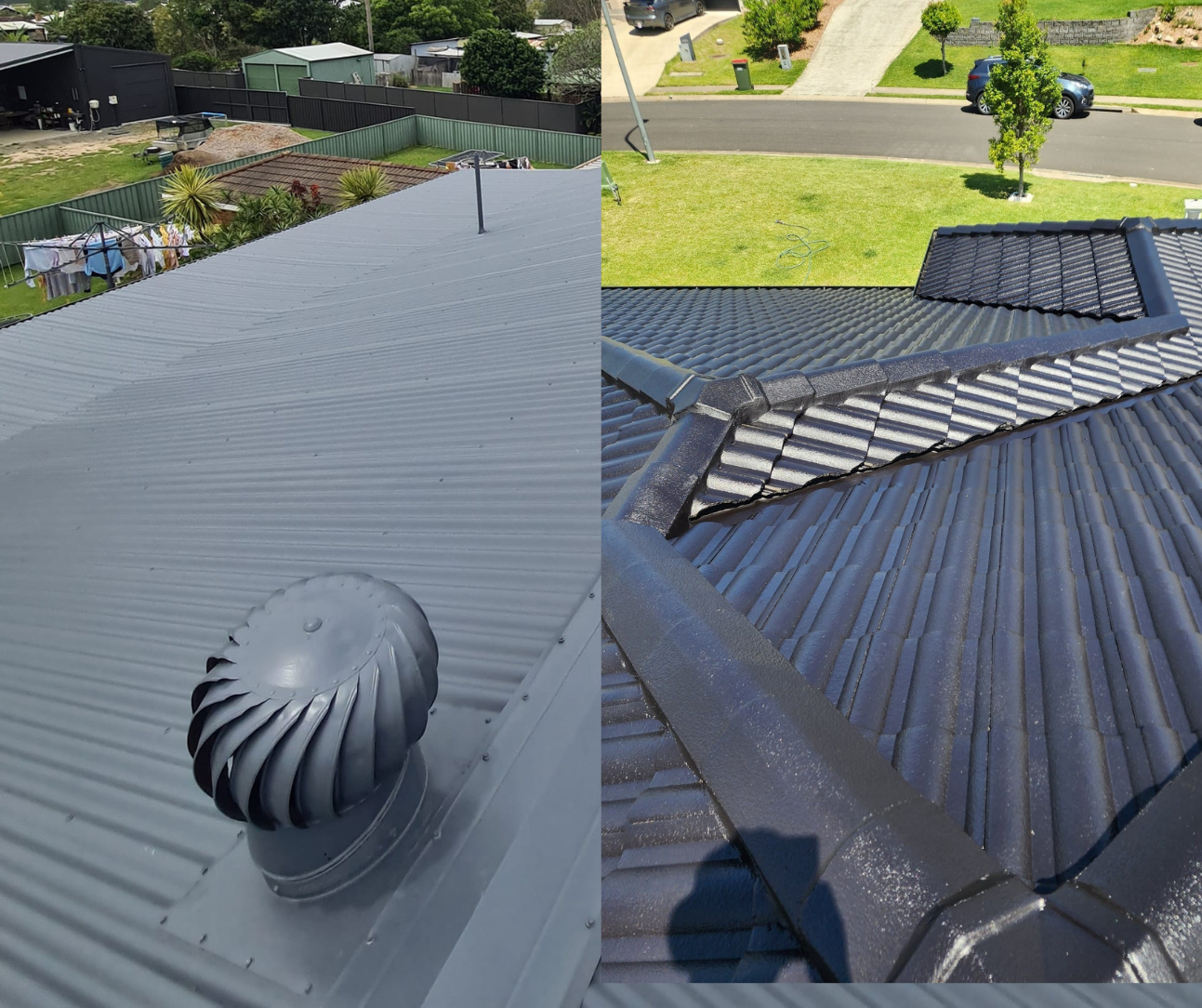
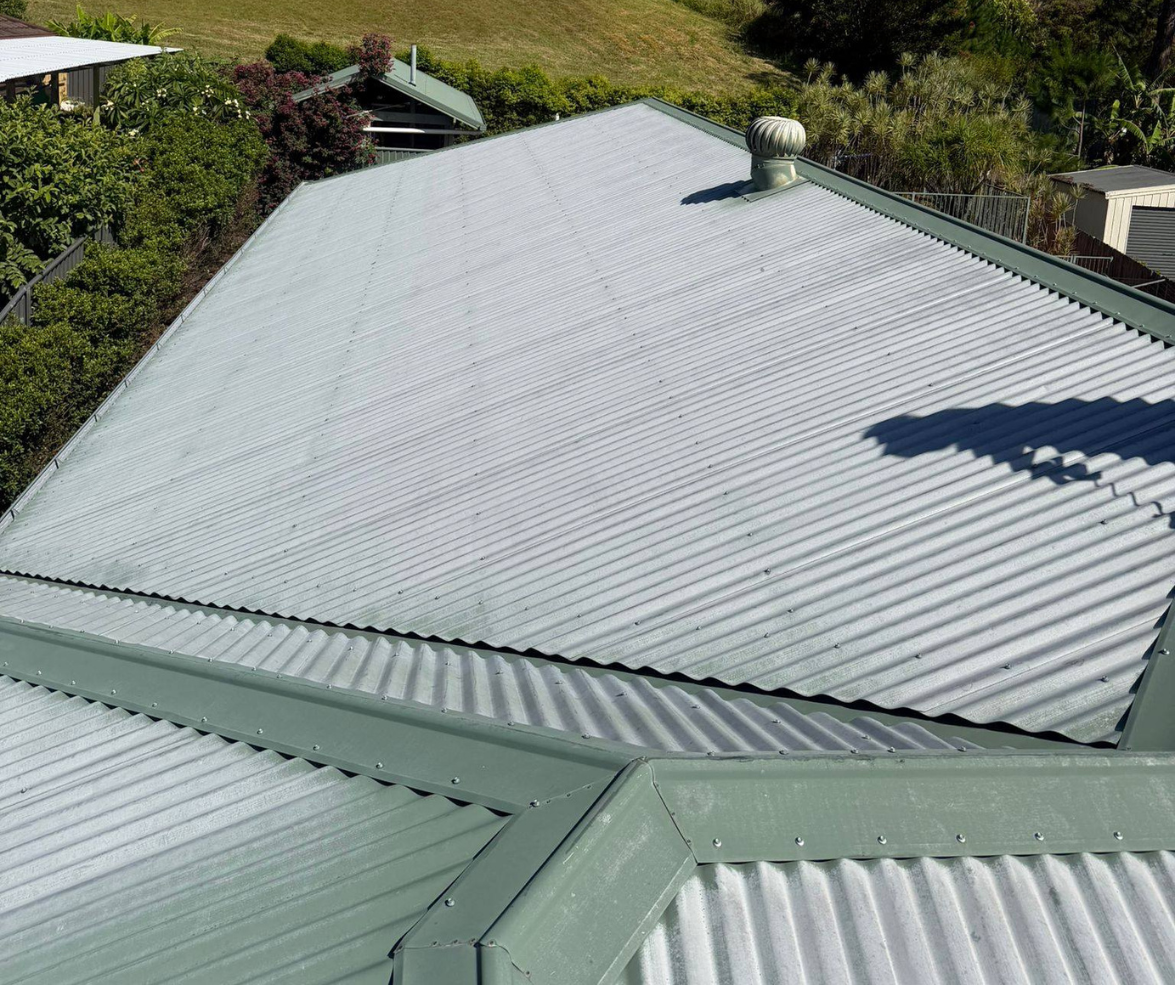
Tile roofs, both concrete and terracotta, generally take longer than metal roofs like Colorbond, Trimdek and Clip Lock. Tiles need individual alignment checks, the ridge caps need slower-cure bedding, and lichen tends to embed itself deep into porous tile surfaces, so it takes more time to clean off properly.
Roof condition
A roof with light fading and clean, intact ridges is a far quicker job than one with cracked tiles, crumbling pointing, blocked valleys and years of lichen growth. The initial inspection is where the true condition gets assessed, and that shapes the roof restoration timeline more than almost anything else.
Weather windows
Coatings cannot go on in the rain, and each coat needs a dry stretch to cure before the next one follows. A run of fine days is essential. On the NSW Mid North Coast, where summer afternoon storms are common, weather is often the single biggest variable in the schedule.
Repair scope
Extensive re-bedding, ridge cap repointing, valley repairs, re-screwing on metal roofs, or replacing a lot of broken tiles all add days to the job. A roof that only needs minor repairs moves through this stage quickly.
Access and safety setup
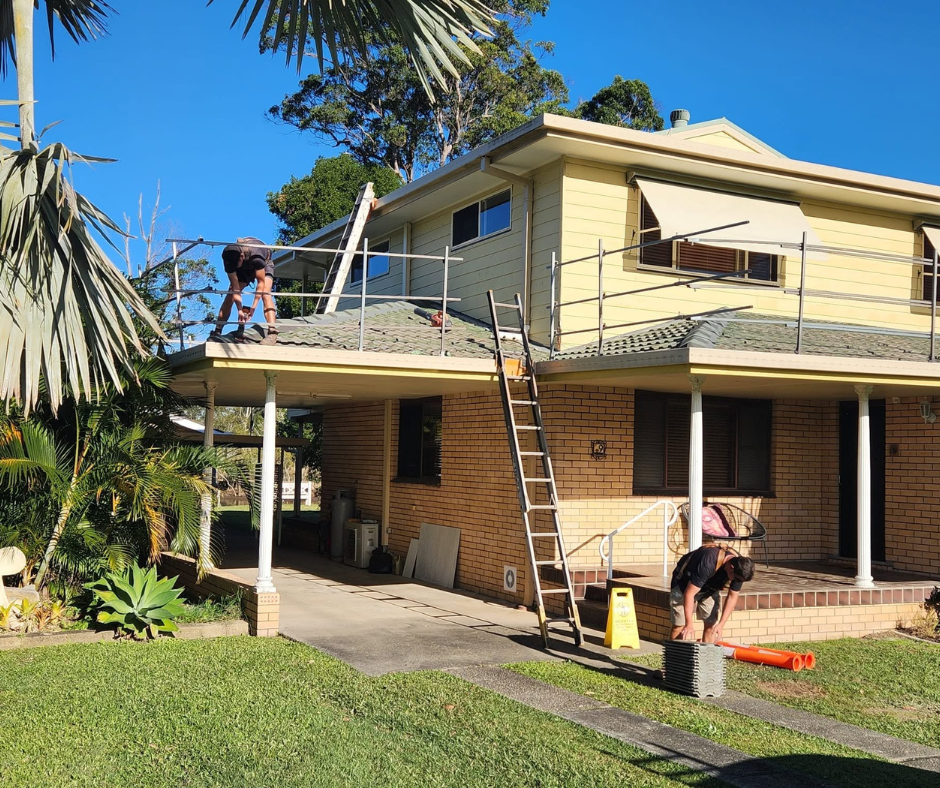
Steeper pitches and awkward roof geometry need more time to set up safely. ColourMe works under NSW Safe Work practices, with harnesses, bollards and signage, and both Dave and Jake hold Working at Height tickets. That setup adds a little time, and it protects everyone on and around the property.
Here is a rough guide to how on-site duration tends to break down by roof type:
| Roof Type | Typical On-Site Duration | What Can Add Time |
|---|---|---|
| Concrete tile | 4 to 6 days | Extensive repointing, heavy lichen |
| Terracotta tile | 3 to 5 days | Fragile tiles needing careful handling |
| Colorbond / metal | 2 to 4 days | Corrosion spots needing rust treatment |
| Trimdek / Clip Lock | 2 to 4 days | Scope of re-screwing required |
The Roof Restoration Timeline: What Happens at Each Stage
Here is the roof restoration step by step, from the first knock on your door to the final walk-around. We have laid it out so you can see what the crew is doing at each stage and, just as importantly, what you will see and hear from the ground.
Stage 1: Pre-Job Inspection and Quote (Before Work Begins)
This part happens well before anyone climbs on your roof, and it is worth understanding because it sets your start date. With ColourMe, Dave personally comes out to meet you, climbs up, photographs any problem areas, and walks you through exactly what he finds.
You will have a detailed written quote back within 24 to 48 hours of that inspection, often sooner. Once you accept it, the job goes into the schedule for the next available slot, and you receive a written contract, which also serves as your 10-year written warranty.
Stage 2: High-Pressure Cleaning (Day 1 to 2)
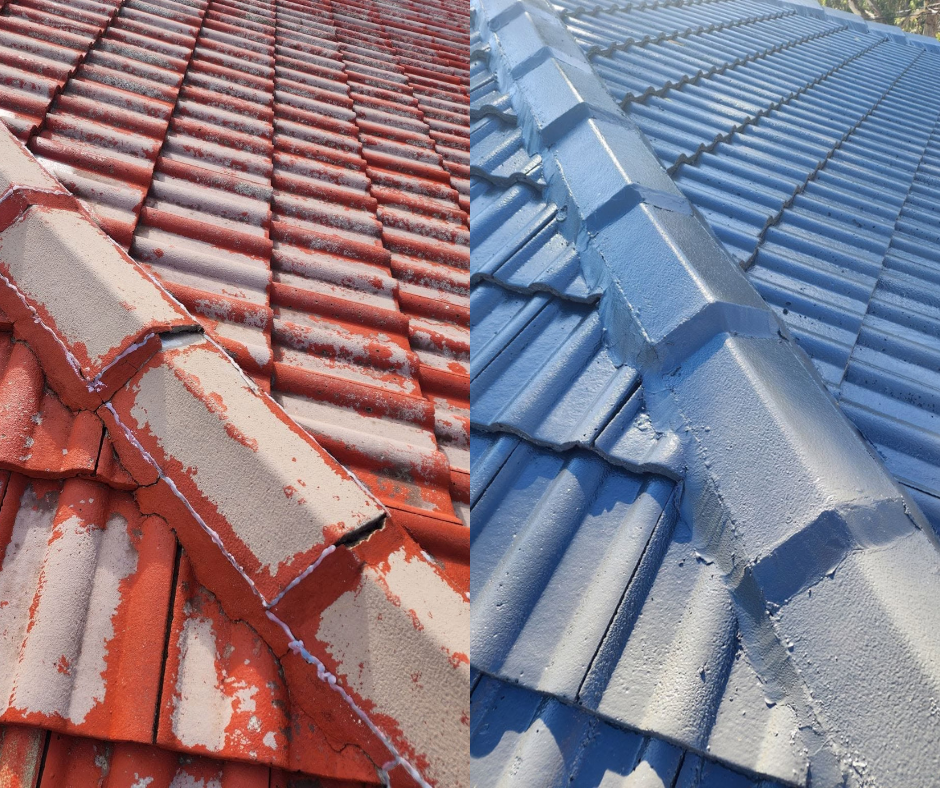
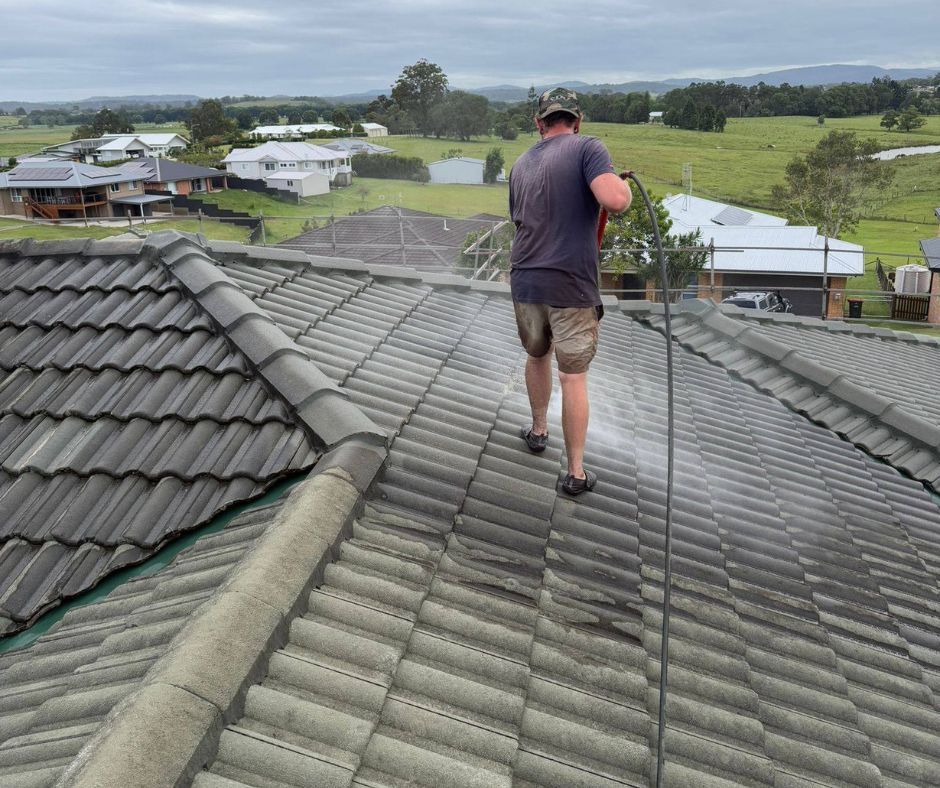
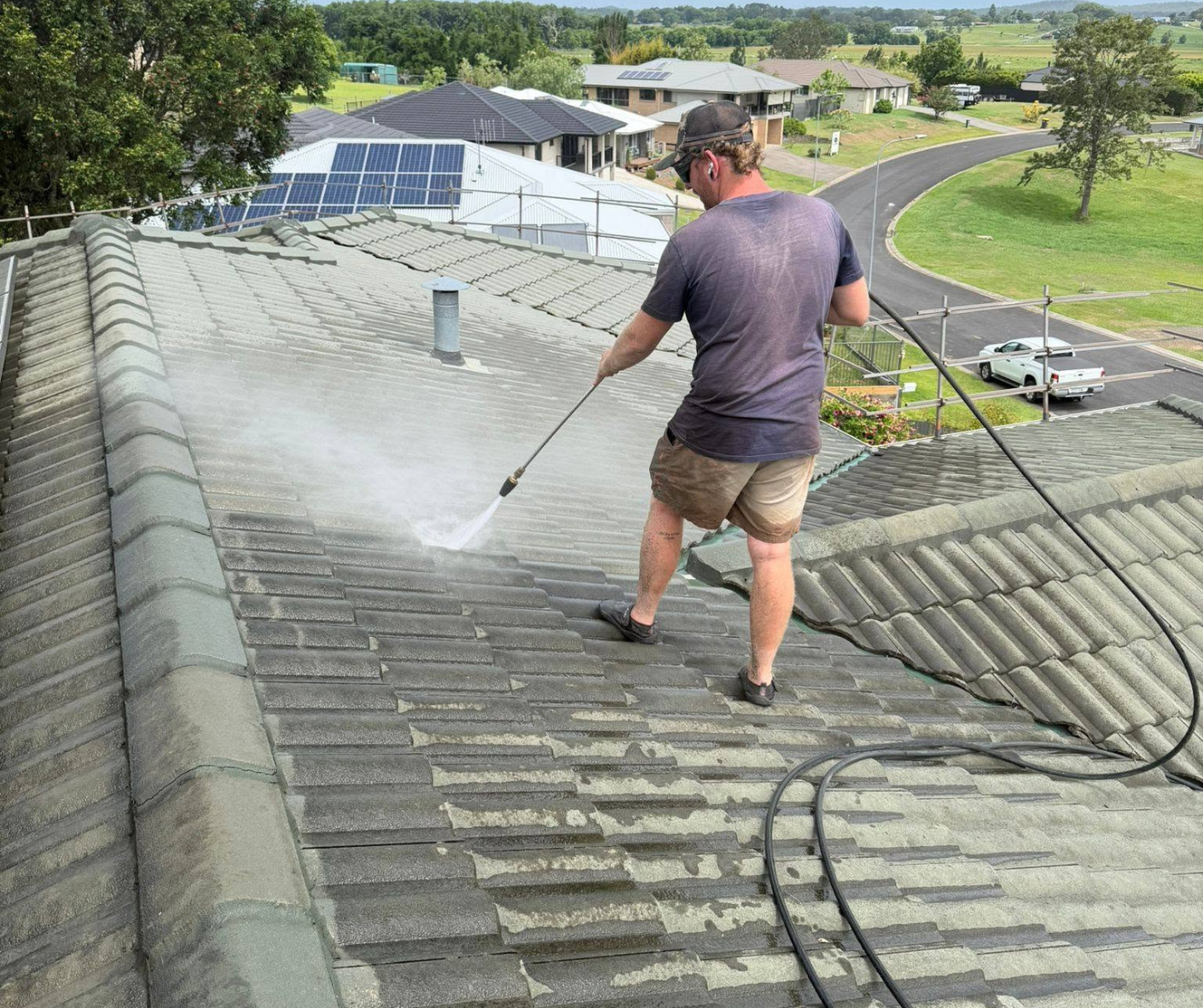
This is usually the first day on site. A pressure cleaner running at 3,500 PSI or more strips away years of lichen, moss, algae, dirt and grime from the surface. The gutters get cleared out as part of this stage, too.
Why does it matter so much? Because coatings simply will not bond to a dirty surface, and any lichen left behind will grow straight back through your brand new coating. Proper pressure washing roof preparation is the foundation on which the entire job is built.
A quick tip from the team: a common mistake homeowners make is assuming a light rinse is enough. Lichen roots itself into porous tile, and you need real pressure to break that bond before any primer goes down. Skipping or rushing this step is the single most common reason a restoration fails early. Expect some noise and overspray on this day, so move the cars and cover any pot plants or outdoor furniture before the crew arrives.
Stage 3: Repairs, Repointing and Tile Work (Day 2 to 4)
With the roof clean, the next job is making it structurally sound before a drop of paint goes anywhere near it. On tile roofs, this means replacing broken or cracked tiles, re-bedding loose ridge caps, and re-pointing the ridge joints with flexible pointing compound rather than rigid cement, which cracks over time.
On metal roofs, this stage covers replacing loose or missing screws, treating any corrosion, and sorting out valley or flashing issues. The reason the order matters is is because painting over broken tiles or unsealed ridges just traps moisture underneath and guarantees the coating will fail.
Worth knowing too is that ColourMe Painting Roof Restoration does not offer roof repairs as a standalone service. Repairs are always done as part of a full restoration, so the actual cause of a leak gets fixed, not just painted over. How long this stage takes depends entirely on condition. A well-maintained roof needs little, a roof untouched for two decades needs more.
Stage 4: Primer and Sealer (Day 4 to 5)
Once the surface is clean, dry and all the repairs are done, a primer or sealer coat goes across the whole roof. On tile, this seals the porous surface and gives the colour coats above something to bond to. On metal and Colorbond roofs, this stage includes a rust-inhibiting primer if needed.
Once the primer has been applied, the roof needs a full dry window, usually at least 24 hours, before the next coat can follow. The drying time between coats is a deliberate, necessary part of the process, and it is working exactly as it should.
Stage 5: First and Second Colour Coat (Day 5 to 7)
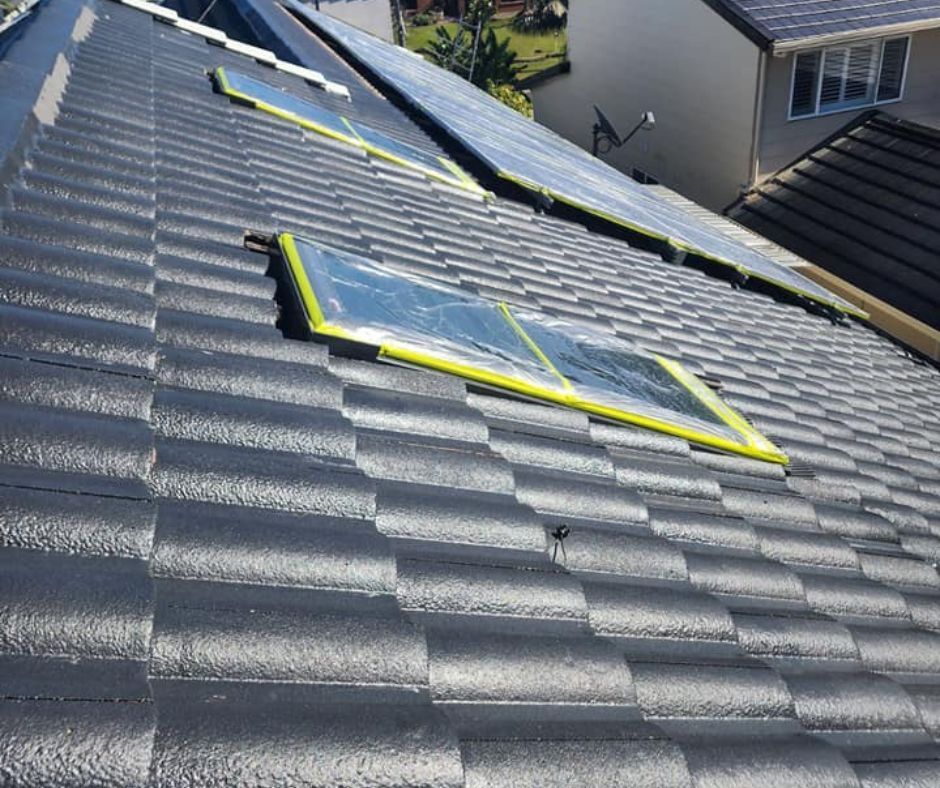
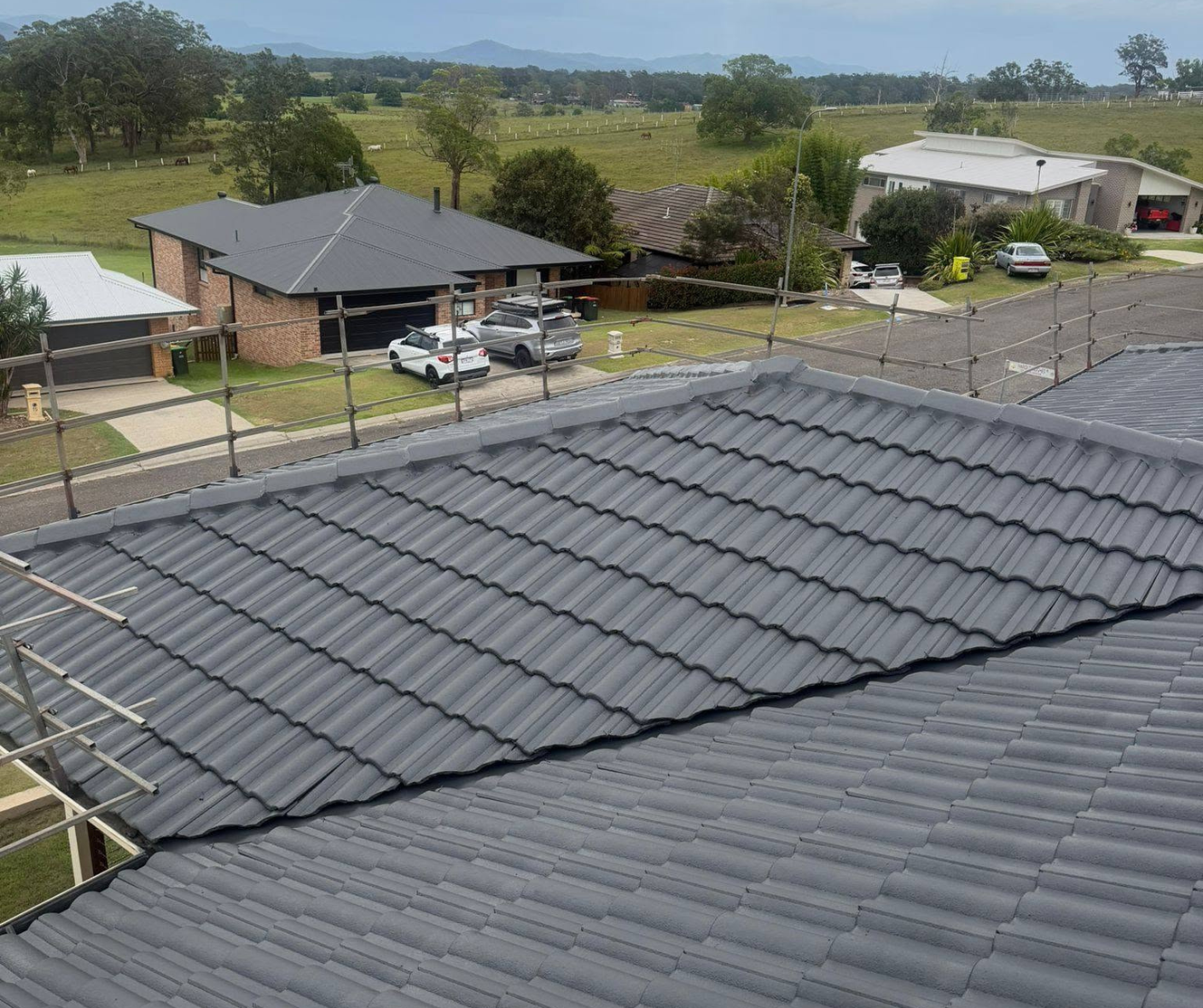
The colour goes on in two separate coats, and each one needs a full dry period before the next. This is another stage that absolutely cannot be rushed, because rushing it is one of the most common causes of premature coating failure. Proper roof membrane curing between coats is what gives the finish its longevity.
ColourMe uses high-quality roof membrane products from trusted brands. These are purpose-built roof coatings, and the difference shows in how long the finish lasts. On some roofs, particularly with premium coating systems, a third coat is applied for extra protection, and if that is the case for your roof, you will have been told during quoting.
Stage 6: Final Inspection, Touch-Ups and Clean-Up (Final Day)
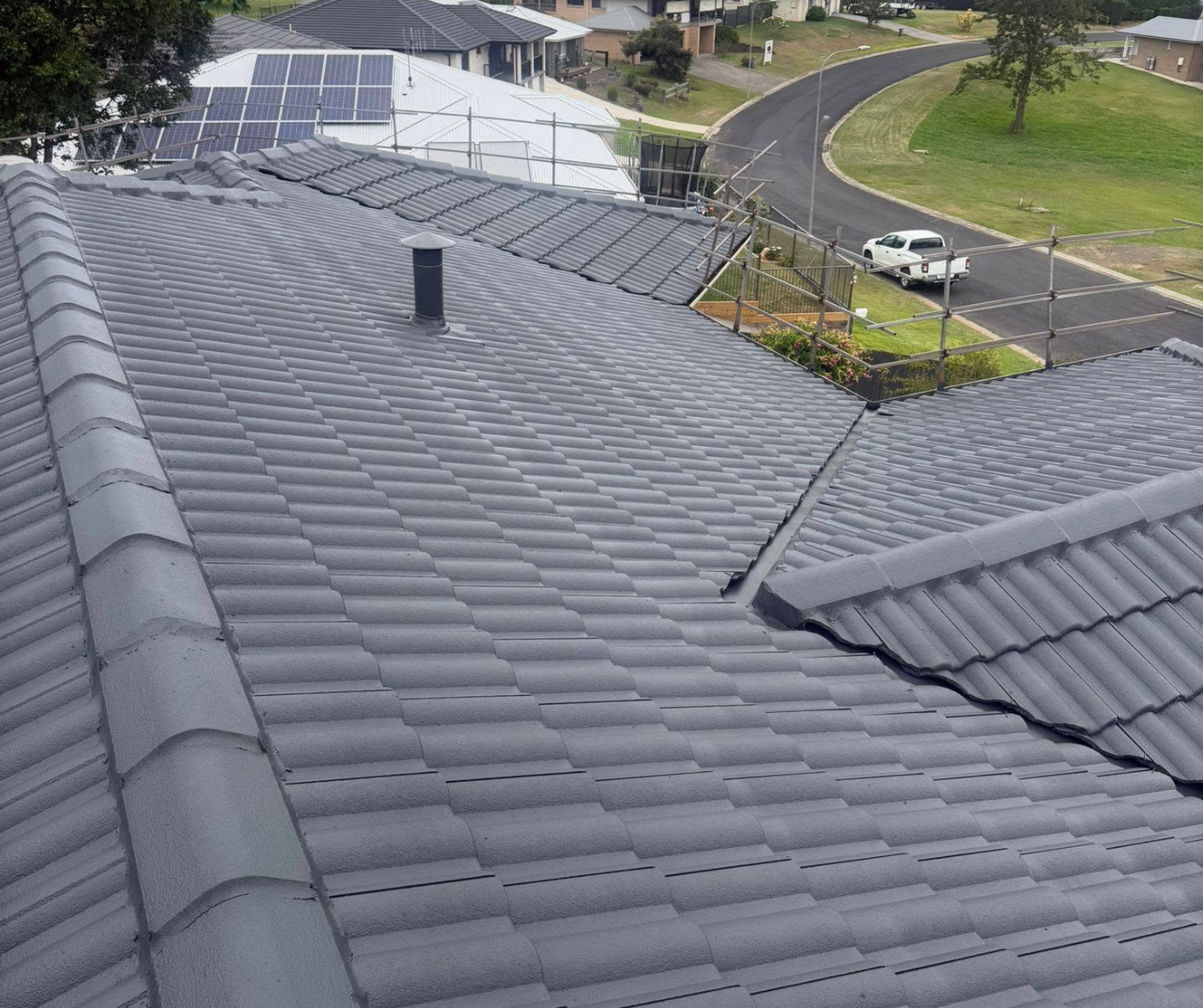
Once the last coat is fully dry, Dave and Jake do a thorough walk-around. They check the coverage is even, confirm every ridge and valley is properly sealed, and make sure the gutters and downpipes are clear and flowing. Any minor touch-ups get sorted on the spot. Then the work area is cleaned up properly, and all the gear is cleared off your property.
What Happens if It Rains During Your Roof Restoration
This is the question nearly every homeowner asks, and it is a good one. The honest answer is that rain affects each stage differently, and a professional crew plans around it.
During the roof cleaning stage, rain is not a disaster. The cleaning can be paused and picked back up once conditions improve. During the repairs stage, it becomes more important as repointing compound and bedding mortar cannot be applied in wet weather or allowed to wash out before they cure, so this phase gets paused and rescheduled if rain is on the way.
The coating stages are the most weather-sensitive of all. Primer and colour coats cannot go on in rain, high humidity or extreme heat, and they need a proper dry window to cure. If rain lands on a coat that has not fully cured, that section may need to be redone.
This is exactly why weather delays roof work so often, and why a good contractor watches the forecast closely. ColourMe monitors conditions in the days before each job and stays in contact with you about any scheduling changes, so you are never left wondering.
On the Mid North Coast, weather delays are most likely in summer and least likely in autumn and spring, which is one of the reasons
timing your roof restoration well makes a real difference.
Booking Lead Time vs On-Site Days: The Full Picture
It is easy to mix up two very different things: when the work starts, and how long it takes once it does. Getting clear on both saves a lot of frustration.
From your first enquiry to a written quote, ColourMe aims to have everything back to you within 24 to 48 hours of the inspection. From accepting that quote to the crew arriving, expect a wait of a few weeks, depending on current bookings, material availability and the season, with the busier spring and autumn periods tending to run longer. The on-site work itself, as covered above, is three to seven working days for most homes.
Throughout that lead-up, you are kept in the loop. We let you know how the schedule is tracking in the weeks before your start date, and we are upfront about any adjustments needed for weather or the progress of jobs ahead of yours.
Conclusion
For most homes, a professional roof restoration takes three to seven days on the roof, with some natural variation depending on your roof's material, its condition, and the weather. The thing to hold onto is that the timeline is not arbitrary. Each stage has to be completed and given time to dry before the next one begins, and that careful sequencing is precisely what makes the result last for years rather than months.
You came here wanting to know what you were signing up for, and now you have the full picture. If you would like that picture made specific to your roof, ColourMe Painting Roof Restoration offers a free roof assessment and written quote. Dave personally meets every client, climbs the roof, photographs the problem areas, and has a detailed quote back to you within 24 to 48 hours. When you are ready, get in touch, and we will take it from there.
Key Takeaways
- Most residential roof restorations take three to seven working days on site, weather permitting, with larger or heavily damaged roofs running to eight or ten days.
- The job runs through six stages: inspection, pressure cleaning, repairs, primer, colour coats, and final inspection. Each stage must be finished and dry before the next begins.
- Tile roofs, both concrete and terracotta, generally take longer than metal roofs because of the time needed for ridge repointing and careful tile handling.
- Drying time between coats is not downtime. It is the coating system doing exactly what it is designed to do, and rushing it is the most common cause of early coating failure.
- Booking lead time, usually a few weeks ahead of your start date, is separate from the on-site days. Plan for around two to four weeks from enquiry to a finished roof.
- Weather is the biggest variable, and autumn and spring offer the most reliable scheduling windows.
Frequently Asked Questions
1. How long does a roof restoration take for an average home?
For most average-sized Australian homes, the on-site work takes three to seven working days, weather permitting. Larger homes or roofs in poor condition can take eight or ten days. This covers the actual work on the roof and does not include the booking lead time before the crew arrives.
2. Does the timeline include weekends?
This depends on the contractor. Most restoration crews work Monday to Friday, so weekends are usually not counted in the working-day estimate. It is always worth clarifying during the quoting stage whether your roofer works Saturdays, so you have an accurate picture of the calendar.
3. How long does each coat of roof paint take to dry?
Most roof coatings need a minimum of 24 hours between coats under normal conditions. Cooler temperatures and high humidity can extend that further. Applying the next coat before the previous one has cured risks adhesion failure, which is a leading cause of restorations that do not last, so this drying time is never something to rush.
4. Where can I see the roof restoration step by step before I commit?
The simplest way is to ask your contractor to walk you through each stage during the quote, from cleaning and repairs through to priming and the final coats. This article also lays out the full sequence so you know what to expect on each day. Understanding the order of works up front makes it much easier to plan around the disruption and to spot whether a quote has skipped an important stage.
5. Can my roof restoration be done in winter?
In NSW, mild and dry winter days can actually be ideal for restoration work. The main risk is unexpected rain interrupting the coating schedule rather than the cold itself. A good contractor monitors conditions closely and books your coating days around the forecast.
6. How long before I can walk on my newly restored roof?
Most roof coatings are dry to the touch within a few hours, but full curing takes considerably longer. As a rule, avoid walking on or working around a freshly restored roof for at least 48 to 72 hours after the final coat goes on, to give the coating time to harden properly and avoid leaving marks.
7. Will the team be at my house every single day of the project?
Not necessarily. Some stages, particularly the drying periods between coats, mean the crew may not be on site every day. This is normal and built into the process. A good contractor will explain the schedule up front so you are never left wondering what is happening or why there is a quiet day.
8. How far in advance should I book a roof restoration?
During the busier spring and autumn periods, booking four to six weeks ahead is wise. In quieter stretches, two to three weeks is usually enough. ColourMe Painting Roof Restoration aims to have a written quote back to you within 24 to 48 hours of the inspection and keeps you informed as your start date approaches.
9. What can I do to prepare my home before the crew arrives?
Move vehicles out of the driveway, cover outdoor furniture and pot plants, secure pets indoors since the pressure cleaning is loud, and clear any access paths around the home. Your roofing team should give you a simple pre-job checklist so nothing gets missed.
10. Does rain during a roof restoration ruin the job?
Rain during the cleaning or repair stage is usually manageable, as the crew simply pauses and resumes once it clears. Rain during the coating stage is more serious: if a fresh coat has not cured, that section may need to be redone. This is why a professional contractor watches the forecast carefully and reschedules coating days whenever rain looks likely.
Let’s talk about your project
Fill out the form, or call us to arrange a free roof assessment and written quote
Home Page Form