Blog
It usually starts small. A brown ring appears on the ceiling after a heavy night of rain, or you notice from the driveway that the roof has gone chalky and faded while you weren't paying attention. Then comes the question we get asked more than any other: does this need a quick fix, or does the whole roof need doing?
That question, restoration vs repair, matters more than most people realise when they first ask it. Get it right, and you buy your roof another decade or more of protection. Get it wrong, and you can spend money for years without ever actually solving the problem.
We have been on a lot of roof restorations around Coffs Harbour and Port Macquarie, and the honest answer is that both options are the right call in different situations. Here is how we work out which one a roof in front of us actually needs, so you can do the same with yours before you start ringing around for quotes.
Roof Repair vs Restore: The Short Answer
A roof repair fixes one specific, isolated problem, a leaking flashing, a few broken tiles, one worn section of pointing. It suits a newer roof that is otherwise in good shape. A roof restoration renews the entire roof instead: a full clean, repairs to any damaged areas, rebedding and repointing where it is needed, then a protective coating system over the top. It suits a roof that is showing its age across the whole surface rather than in one spot.
The deciding factors are how widespread the wear is, how old the roof is, and how many years of protection you want for the money you spend.
ColourMe Painting Roof Restoration have spent 34 years in the painting trade, and we focus on
roof restoration in Coffs Harbour and Port Macquarie, so we have a fair idea of what a full restoration actually includes and where a repair genuinely does the job.
What is a Roof Restoration
A restoration is a renewal of the roof you already have. It is not a patch job with a coat of paint over the top, and anyone selling it as one is doing you no favours.
What the work actually involves
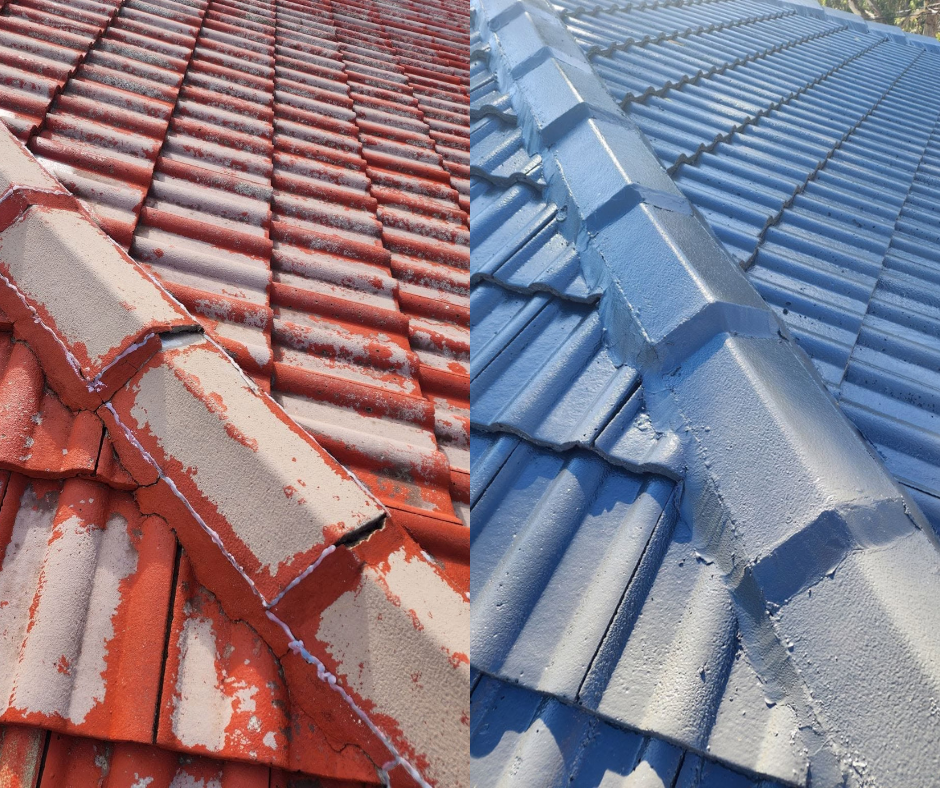
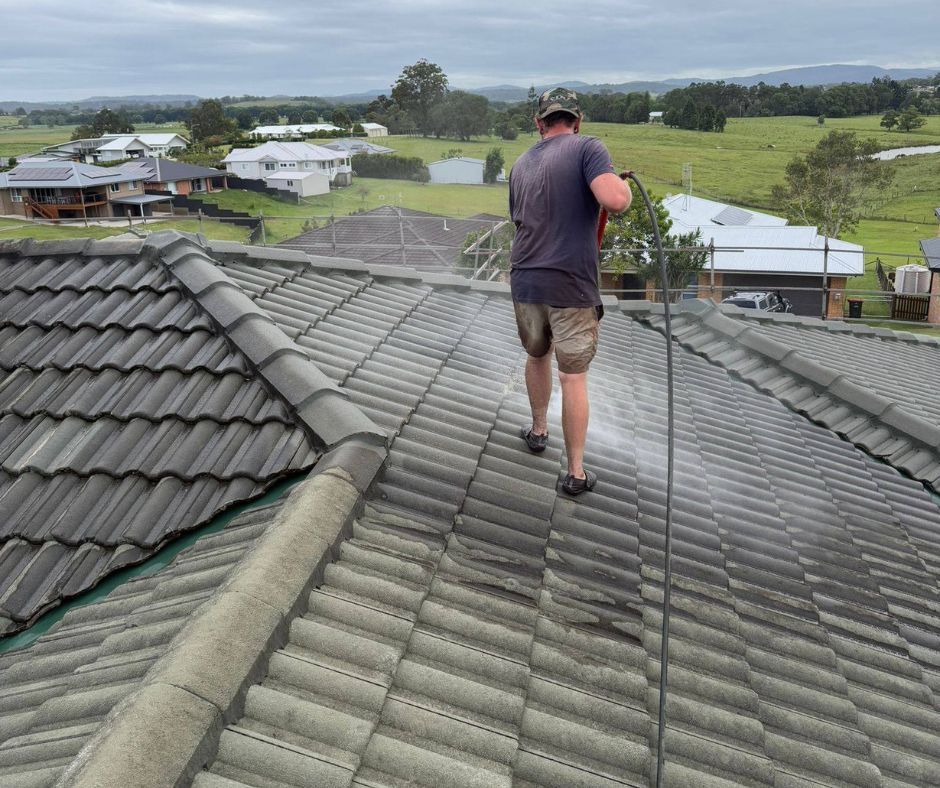
The roof restoration process follows the same logical order on nearly every job. We pressure clean the roof to strip off years of dirt, moss and chalking. We then repair what needs repairing, such as broken tiles replaced, ridge caps rebedded and repointed where the old mortar has given up, rusted screws replaced and corrosion treated on a metal roof. Only once the surface is sound and clean does the coating go on.
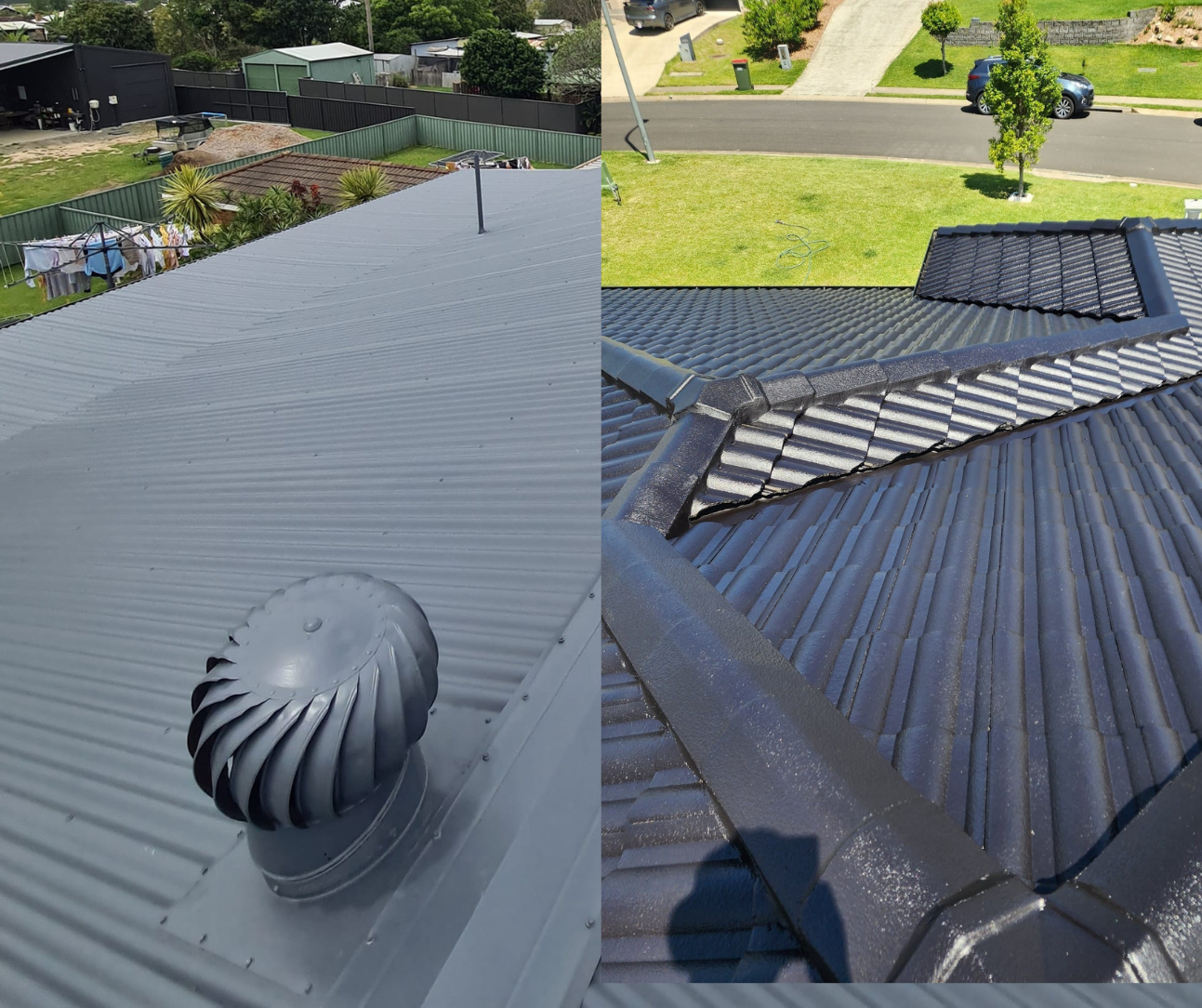
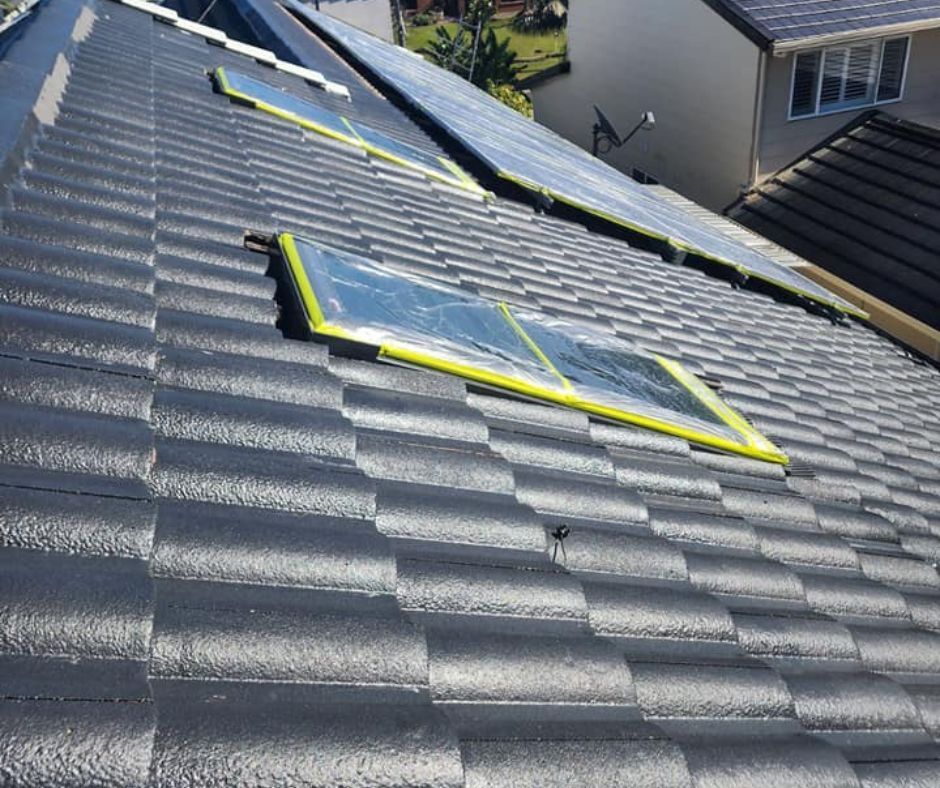
We use premium, Australian-made roof coating products applied over a properly prepared surface, and on metal roofs you choose your new colour from the full Colorbond range. The same two people who quote your roof are the two people who do the work, because we do not subcontract. Every job carries a 10-year written warranty on workmanship and paint.
Why it buys you years, not months
Done properly, a restoration does not just make a tired roof look presentable again. It restores the weather protection that has worn away, which is what lets you extend roof lifespan by a decade or more rather than simply resetting the clock on the appearance. That is the real difference between a restoration and a cosmetic tidy-up.
What is a Roof Repair
A repair is a targeted fix for one identified problem. It might be resealing a leaking valley, replacing a handful of cracked roof tiles after a storm, refixing a length of loose flashing, or repointing one ridge that has started to crumble.
Repairs have a genuine place, and we would never tell you otherwise. Plenty of the homes we look at need a roof repair or restoration for reasons that have nothing to do with age, storm damage being the obvious one. When a problem is truly contained, and the rest of the roof is sound, a repair is the sensible, proportionate response. It stops a small issue turning into an expensive one.
What a repair cannot do is change the condition of the roof around it. It treats the symptom you can see. If the surface has gone porous, the pointing is failing along every ridge, or corrosion has taken hold across a metal roof, a repair addresses one spot on a roof that is quietly declining everywhere else. That is when repairs stop being a solution and start becoming a routine.
Roof Restoration vs Repair at a Glance
| Roof Repair | Roof Restoration | |
|---|---|---|
| What it covers | One identified fault | The entire roof surface |
| Typical scope | Seal, patch, replace a few tiles or screws | Clean, repair, repoint, then coat |
| Upfront cost | Lower | Higher |
| Years of life added | Little to none beyond the fixed spot | Commonly 10 to 15 years or more |
| Time on site | Usually part of a day | Several days, weather permitting |
| Appearance | Unchanged | Completely renewed |
| Best suited to | A newer roof with one contained problem | An ageing roof with wear across the surface |
When a Roof Repair is Enough, & When It Isn't
This is where the decision actually gets made. In our experience, the roof itself tells you, as long as you know what you are looking at.
Signs a repair will do the job
- The roof is relatively young and in good overall condition
- The problem is in one place (a single leak, a few broken tiles, one worn stretch of pointing)
- The surface still holds its colour and does not feel chalky or porous underfoot
- Roof lines are straight with no sagging or movement
- This is the first issue you have had, not the latest in a run of them
Signs your roof needs a restoration instead
- Wear is showing everywhere, not somewhere (faded or chalking surface, moss taking hold, multiple cracked tiles, pointing crumbling along the ridges)
- Recurring roof leaks, or new leaks appearing in rooms that were previously dry
- The roof is 10 to 15 years or more into its life and has never been renewed
- You have paid for the same kind of repair more than once
No single item on that second list is decisive on its own. What matters is how many of the telltale signs a roof is ready for restoration are showing at once, because they rarely turn up one at a time.
The Cost Question: Cheapest Now vs Best Value Over Time
Almost everyone opens the repair vs restore conversation with price, and fairly so. A repair costs less than a restoration. That part is not in dispute.
The problem is that comparing the two on upfront price alone answers the wrong question. The useful comparison is cost per year of roof life you are buying. A cheap repair that holds for twelve months before the next issue appears is expensive per year. A restoration that adds ten or fifteen years to a sound roof, with a written warranty behind it, is often the cheaper option measured that way, even though the invoice is bigger on the day.
The Cumulative-damage Trap
Here is the pattern we see on roofs more than any other, and it is the reason we are careful about how we answer this question.
A homeowner has a leak fixed. Twelve months later, there is another one, somewhere else. It gets fixed too. A year after that, a third.
Each repair looked like the responsible, thrifty choice. But the leaks were never really separate problems. Water had been tracking under the surface the whole time, or the pointing had been failing along every ridge from the start, or corrosion had been spreading quietly under a coating that gave up years ago.
By the time the pattern becomes obvious, the money spent chasing symptoms would have covered a proper restoration, and the roof still needs one. This is why a genuine roof condition assessment matters more than a quote for the one fault you happened to notice. Reading the whole roof is the difference between solving a problem and managing it indefinitely.
There is a point beyond this too. If a roof is far enough gone that even a restoration cannot deliver fair value, replacement becomes the honest recommendation, and we will tell you so. Weighing up restoration against a full replacement is a different calculation again, and it turns on whether the roof still has sound bones underneath the wear.
How Coastal & High-UV Conditions Change the Decision
Where your house sits changes this decision more than most homeowners expect. Roofs on the Mid North Coast work harder than roofs inland, and they age faster for it.
Salt is the main culprit. Under the National Construction Code's guidance on corrosion protection for sheet roofing, oceanfront areas with breaking surf and significant salt spray fall into a higher corrosion category, extending from 1 kilometre to tens of kilometres inland, depending on wind direction and the shape of the land. Add strong year-round UV and the storms that come through here, and a coating that might last comfortably somewhere dry and sheltered gives up sooner.
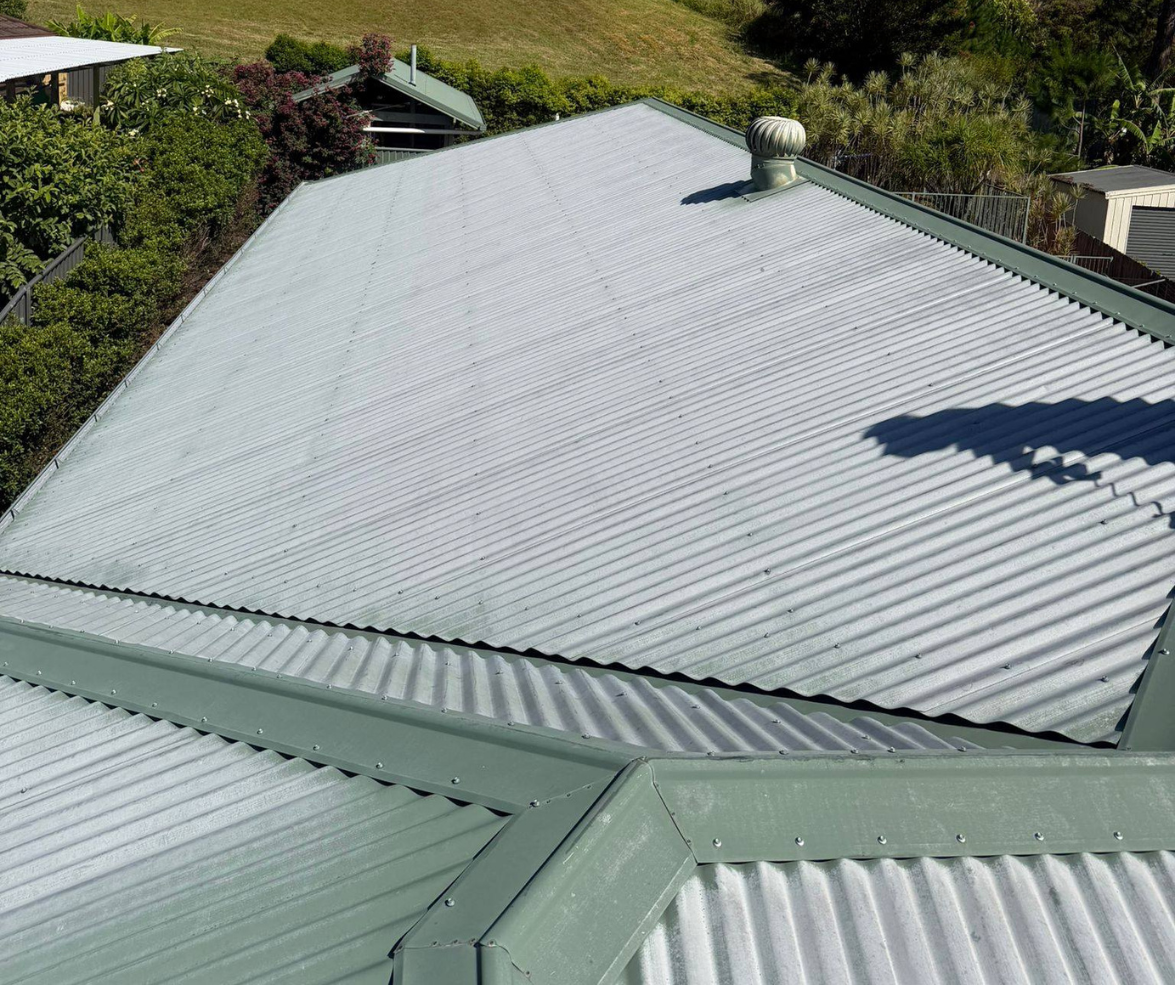
For metal roofs, that shows up first at the fasteners, cut edges and flashings, long before the sheets themselves are in trouble. On tile roofs, the tiles slowly become porous and the mortar breaks down, so ridges start letting water in during driving rain even though nothing looks broken from the ground. In both cases, a fresh protective roof coating applied over a properly prepared surface is doing real work, not just changing the colour.
The practical upshot is that the line between repair territory and restoration territory sits earlier here than it would inland. A roof five minutes from the beach and a roof sitting well back in the hinterland are not on the same timeline, even if they were built the same year.
How to Decide Between a Repair and a Restoration
If you want a straightforward way to work through this at home, run your roof past these five questions.
- How old is the roof, and has it ever been restored? Past ten to fifteen years with no renewal, restoration is likely on the table.
- Is the problem in one spot, or across the surface? One spot points to a repair. Everywhere points to a restoration.
- Is this the first issue, or one of several? A pattern is information. Take it seriously.
- How does the surface look and feel? Faded, chalky or porous is a whole-roof condition, not a local fault.
- Am I fixing the same thing again? If yes, the underlying cause was never addressed.
An isolated fault on a sound, newer roof is a repair. Widespread wear, real age, or problems that keep coming back are a restoration. If you are somewhere in between, that is completely normal, and working out whether the roof needs the full job gets a lot easier once someone has actually been up there and looked.
We offer a free roof assessment and written quote, and we go up and take photos of anything we find so you can see it for yourself rather than taking our word for it. Quotes are generally in your inbox within 24 to 48 hours.
A Note on "Repairs Only" & Why We Don't Offer Them
Before we go further, there is something worth being upfront about, because it shapes how we answer the repair vs restore question. As roof restoration specialists, we do not take on repairs as a standalone job. In our work, a repair is one stage of a restoration rather than a service on its own.
That is not us steering everyone toward the bigger job. If we get up on your roof and find it genuinely needs nothing more than a minor one-off fix, we will tell you that plainly, and you are better off knowing it. But we have learned that what looks like a small repair is very often the first visible sign that a roof is ready for renewal, and we would rather give you the full picture than patch one spot and leave you to discover the rest yourself in two years.
Making the Call Between a Roof Repair or Restoration
The repair or restoration question comes down to three things: how far the wear has spread, how old the roof is, and what you want your money to buy over the long term. A contained problem on a sound roof is a repair. Age, spread, and repetition point to a restoration.
If you are not sure which one you are looking at, that is the most common place to be, and it is not something you should have to work out from the ground. We are happy to come out, get on the roof, and give you a straight answer along with photos and a written quote. You can get in touch with us whenever you are ready.
Key Takeaways
- A roof repair fixes one isolated fault, while a roof restoration renews the whole roof through cleaning, repairs, repointing and recoating.
- Choose a repair for a newer roof with a single contained problem, and a restoration when wear shows across the surface, the roof is ageing, or issues keep returning.
- The most useful comparison is not the upfront price but how much each option costs per year of roof life it buys you.
- Repeated small repairs can mask a larger underlying problem, so the cheaper path often ends up costing more than doing the job properly once.
- Coastal salt spray and strong UV age roofs faster, which moves the restoration decision earlier for homes along the Mid North Coast than for homes inland.
- A proper on-roof assessment is the only reliable way to know which option your roof actually needs.
Frequently Asked Questions
What is the difference between a roof repair and a roof restoration?
A repair addresses one specific fault, such as a leak, a few broken tiles or a worn section of pointing. A restoration renews the whole roof. It is cleaned, repaired where needed, rebedded and repointed, then coated with a protective system. The key thing to understand is that a restoration includes repairs as part of the process, so it is not a choice between fixing the roof and coating it. One is targeted, the other is comprehensive.
Is it cheaper to repair or restore a roof?
A repair is always cheaper on the day. Whether it is cheaper overall depends on the condition of the rest of the roof. If the problem is genuinely isolated, a repair is the better value. If wear has spread across the surface or you have already paid for similar repairs before, a restoration usually works out cheaper per year of protection, and it comes with a warranty that a one-off repair does not.
Is repair and restore the same thing?
No, though the words get used loosely. A repair fixes a fault and leaves the rest of the roof exactly as it was. A restoration resets the condition of the entire roof surface, including any repairs it needs along the way. A repair is one job on one part of the roof, while a restoration is a full process from the clean through to the final coat.
How long does a roof restoration last?
A properly executed restoration commonly adds around 10 to 15 years or more, though the honest answer depends on the roof, the products used and the environment it sits in. Preparation is what decides it. A coating applied over a roof that was not properly cleaned or repaired first will fail early no matter how good the product is. We back our work with a 10-year written warranty on both workmanship and paint.
Are roof restorations worth it?
For a roof that is structurally sound but ageing or worn, yes. You are restoring weather protection and appearance for a fraction of what a full replacement costs, and buying years back on a roof that still has good bones. It is less worth it on a roof that has genuinely failed, where money spent on restoration delays a replacement rather than avoiding one. That is why the assessment should always come first.
When is a roof repair enough on its own?
When the roof is reasonably young, the surface is still in good condition, and the fault is contained to one area. Storm damage on an otherwise healthy roof is a good example. A few tiles cracked by hail on a roof coated five years ago need those tiles replaced, not a full restoration. The test is whether the rest of the roof is genuinely sound, not just whether the visible problem is small.
Will repairs alone stop my roof leaking long term?
Sometimes, if the cause was genuinely isolated and correctly identified. But if leaks keep returning, or new ones appear in different rooms, that usually points to something happening across the roof rather than in one spot. Water can travel a surprising distance under tiles or sheets before it shows up inside, so the stain on your ceiling is often nowhere near the actual entry point. Recurring leaks are worth investigating as a whole-roof issue.
Does a roof restoration include repairs?
Yes, and it has to. Broken tiles, failed pointing, rusted screws and damaged flashings all get dealt with before any coating goes on, because coating over an unrepaired roof simply hides the problem for a while. This is also why we treat repairs as part of a restoration rather than offering them separately. The repair work is a stage of the process, not an optional extra.
How do I know whether my roof needs a repair or a restoration?
Work through the roof's age, whether the wear is in one place or everywhere, and whether you have had the same problem before. Those three answers settle the restoration vs repair question for most people. If they do not, or if you cannot safely see enough of the roof to judge, a free assessment settles it. We take photos of what we find up there and walk you through them, so the decision is based on the actual condition rather than guesswork.
What about full roof replacement, is that ever the better option?
Yes. For a roof that is very old, structurally compromised or failing across the board, replacement can be the smarter spend, because a restoration on a roof like that will not deliver value. We would tell you if we thought that was the case for your roof. Restoration against a full replacement is a genuinely different question, and it hinges on the condition of the roof structure underneath rather than the state of the surface.
Let’s talk about your project
Fill out the form, or call us to arrange a free roof assessment and written quote
Home Page Form