Blog
Something has caught your eye. Maybe the roof looks faded and tired from the street, maybe there is a faint brown stain creeping across a ceiling, or maybe a neighbour just had theirs done and now yours looks a decade older by comparison. Either way, you are asking the question we hear more than almost any other, “Do I need a roof restoration, or is someone about to talk me into one I do not really need?”
It is a fair question, and an honest answer matters more than a sale. Not every weathered roof needs the full treatment. In more than 16 years of restoring roofs across the Coffs Harbour region, we at ColourMe Painting Roof Restoration have found that most homeowners fall into one of three situations:
- Their roof genuinely needs restoring
- Only a small repair is needed
- The problem is actually a gutter fault wearing a disguise
This guide walks you through how to work out which camp you are in, before you ever pick up the phone.
Do I Really Need a Roof Restoration?
You most likely need a full restoration when several signs of wear turn up together, such as faded or flaking coating, cracked or broken tiles, crumbling ridge caps, and the first signs of moisture getting inside. Add a roof that has not been maintained in roughly 10 to 15 years, and restoration is almost always the right call.
If you have only spotted one small issue on an otherwise sound roof, you probably need a targeted repair, or even just a gutter fix, rather than the whole job.

First, What Counts as a Full Roof Restoration?
It helps to be clear on terms, because the word restoration gets used loosely. A full restoration means cleaning the roof back to a sound surface, carrying out repairs, re-bedding and repointing the ridge caps, then sealing and recoating the entire roof.
That is very different from a spot repair, which might be swapping out a cracked tile or two, and different again from
a plain repaint, which is colour with none of the prep or repair work underneath. Knowing that difference is what lets you judge whether your roof needs the whole job or just one part of it.
The Homeowner's Roof Self-Assessment Checklist
Before booking a professional roof restoration assessment, there are signs that your roof needs restoration which you can safely check yourself from ground level. This is the part no glossy brochure gives you. A straight, honest look at your own roof, so you walk into any quote already knowing roughly where you stand.
Run through the three groups below and keep a tally. One or two ticks are usually nothing to worry about. It is when the ticks start stacking up across all three groups that a proper roof condition check is worth arranging.
One golden rule throughout, though, is to do all of this from the ground, or at most from a securely footed ladder at the gutter line. Never climb onto the roof itself. Falls from roofs and ladders are the leading cause of serious injury. It simply is not worth the risk.
From the Ground (Binoculars or a Phone Zoom)
From the footpath or your backyard, look up and check for:
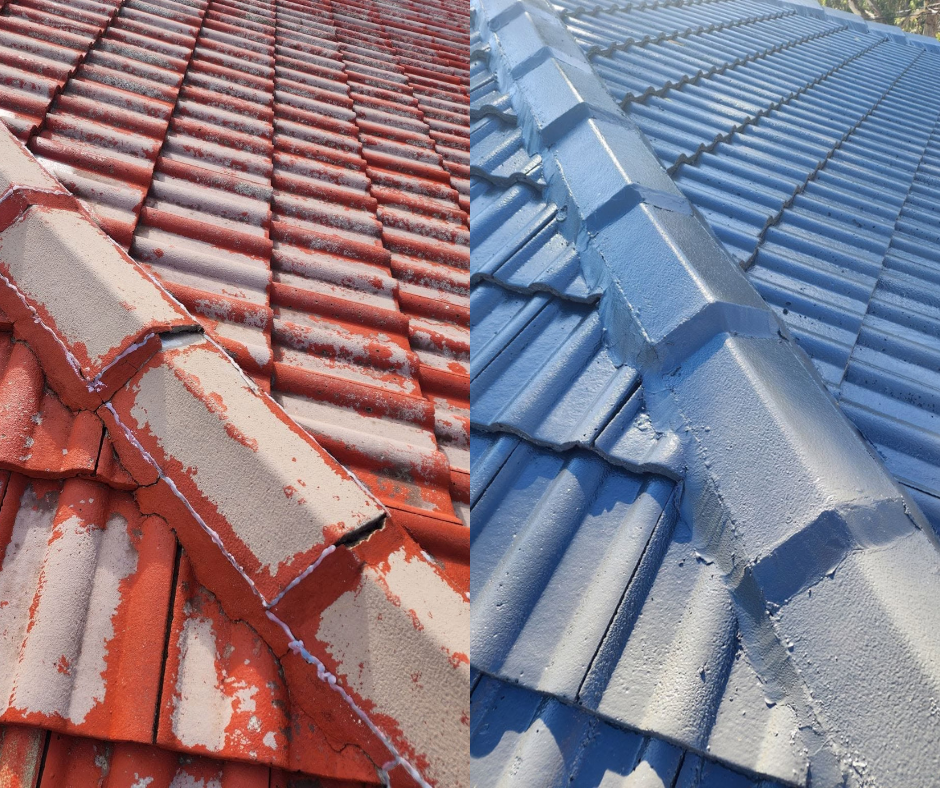
- Faded, patchy or chalky colour, a classic sign of surface coating wear
- Obvious flaking or peeling on the coating
- Cracked, chipped, slipped or broken tiles
- Rust streaks, staining or dull, oxidised colour on metal or Colorbond roofs
- Moss, lichen or dark biological growth spreading across the surface
- Sagging lines, or sections that simply look uneven
At the Gutter Line & Up Close (Safely, No Roof Walking)
From a stable ladder at the eaves, or anywhere you can see the roof edges clearly:
- Cracked, crumbling or missing mortar along the ridge capping
- Ridge caps that look loose or have visibly lifted
- Grit or fine granules collecting in the gutters, shed from a coating that is breaking down
- Rusted gutters or holes letting water track back toward the fascia
- Lifting or corroded screws and flashing on metal roofs
From Inside the House
Head into the roof space and the top-floor rooms and look for:
- Water stains or brown marks on ceilings or cornices
- Damp patches or a musty smell in the roof cavity after rain
- Daylight showing through the roof space where it should not
- Leaks that only appear during heavy or wind-driven rain
Reading Your Results: Restore, Repair or Wait?
So, how do you read the tally? Here is how we would answer the question, “Do i really need a full roof restoration?” if this were our own home.
- Ticks across all three groups. A full restoration is very likely the right move, and doing it now protects the structure before small problems compound into big, expensive ones.
- One or two isolated issues. You may only need a targeted repair, and sometimes the culprit is not the roof surface at all but the gutters or flashing (more on that next). Do not pay for a full restoration you do not need.
- Widespread, severe damage to a very old roof. Your roof may be past restoring, in which case replacement could be the smarter choice.
The tie-breaker is almost always age and history. A roof that has not been touched in 10 to 15 years usually benefits from a restoration. One that has been maintained on a regular cycle might only need a top-up.
When It's Not a Restoration (& a Good Roofer Will Tell You)
Here is something a lot of homeowners do not expect to hear from a roofer: sometimes what looks like the roof needing work is actually a much smaller fix. A leak during heavy rain often traces back to rusted or blocked gutters, overflowing downpipes, or cracked flashing around a vent or chimney, none of which call for a full restoration. A single broken tile is a repair, not a reason to recoat the whole roof.
A reputable roofer will point that out rather than upsell you. It is one of the reasons we do not use subcontractors: the person who quotes your job is the person who does the work, so there is no incentive to pad it out.
If you are weighing a smaller fix against the full job, it helps to understand where a repair ends and a restoration begins before you decide. And if a contractor recommends a full restoration of the back of one cracked tile, get a second opinion.
When a Roof Is Too Far Gone to Restore
Just as importantly, not every roof can, or should, be restored. Concrete or terracotta tiles that have gone porous and are cracking or crumbling across the whole roof are often past the point where a coating will help. Metal roofs with rust eaten right through the base sheet are in the same boat, as are roofs near the end of their life that have never seen any maintenance. In cases like these, replacement is usually the better long-term investment.
This is where impartial advice really counts. We restore roofs, we do not replace them, so if we tell you a roof can be brought back to life, it is because it genuinely can. If it cannot, we will say so plainly rather than take on a job that will not last.
Why a Professional Roof Restoration Assessment is Worth It
A ground-level look tells you plenty, but it cannot tell you everything. A professional roof inspection gets up close to the things you simply cannot see from below. The true state of the bedding and pointing, whether the existing coating is still bonded, hidden cracked tiles under solar panels or in the valleys, the condition of the flashings, and the first specks of rust before they spread.
When we come out, Dave or Jake climbs up personally, photographs anything of concern, and shows you the actual condition of your roof, with no guesswork and no pressure. That is why our roof assessment is free, and why every quote comes with our 10-year written warranty set out in writing. You can book a free roof assessment whenever it suits you.
Think of a roof restoration assessment as the sensible next step after checking things yourself, not a commitment to spend a cent. It is also worth confirming that any roofer you let onto your property is properly licensed, which you can do in a couple of minutes through the Service NSW licence check. We are fully licensed with NSW Fair Trading and insured, and it is the same standard of care we bring to every roof we work on.
Do I Really Need A Full Roof Restoration?
Working through the checklist should give you a far clearer answer to the million-dollar question, “Do I need a roof restoration?” than any advertisement or doorknocker ever could. When the signs stack up across the roof surface, the ridge caps and the ceilings inside, a full restoration is usually well worth doing. When they do not, an honest roofer will tell you to hold off or opt for a simpler fix.
If you are still unsure, that is exactly what a proper inspection is for. We are always happy to take a look, give you a straight answer, and if a restoration is the right move, we’ll explain everything it involves before you commit to anything.
Key Takeaways
- A full roof restoration is usually warranted when several signs of wear appear together, not for a single isolated issue.
- Use a three-part self-assessment (from the ground, at the gutter line, and inside the house), and never climb onto the roof yourself.
- Roof age and maintenance history are the deciding factors, 10 to 15 years with no upkeep usually points to restoration.
- Some roof leaks are really gutter or flashing problems, and a trustworthy roofer will say so rather than upsell.
- A roof that is porous, badly rusted or past its life may need replacing instead. Because we do not do replacements, our advice on that is genuinely impartial.
- A professional inspection confirms what a ground-level check cannot, and our roof assessment is free.
Frequently Asked Questions
How do I know if I need a roof restoration?
Start with the self-assessment above. Check your roof from the ground, at the gutter line, and from inside the house, then tally what you find. A handful of signs across all three groups, especially on a roof that has not been maintained in 10 to 15 years, is a strong indicator that restoration is due. A single minor issue usually is not.
Do I need a full restoration, or will repairs do?
It depends on how much of the roof is affected. Widespread wear (fading, multiple cracked tiles, crumbling ridge caps) points to a full restoration, because patching one area at a time on a tired roof is rarely good value. If the roof is otherwise sound and the issue is isolated, a targeted repair is often all that is needed. A proper inspection will tell you which applies.
Are roof restorations worth it?
When they are done at the right time, yes. A restoration extends the life of the roof, protects the structure underneath, and refreshes the look of the whole home, usually for a fraction of the cost of replacement. The key is timing, restoring before the roof deteriorates too far is what makes it a sound investment rather than a stopgap.
How often should you restore a roof?
As a general rule, a roof benefits from restoration roughly every 10 to 15 years, though this varies with the roof type, the quality of the previous work, and the climate. Coastal roofs on the Mid North Coast often reach that point sooner, because salt-laden air accelerates wear on both metal and tile. A roof that is maintained regularly may simply need a top-up rather than a full restoration each time.
How much does a roof restoration cost in Australia?
Costs vary widely, depending on the size and pitch of the roof, its condition, the amount of repair work required, and the roof type. Larger, steeper or more detailed roofs sit at the higher end. The only way to get an accurate figure is a proper inspection, which is why our written quote is free and comes with no obligation.
Can my roof be too old to restore?
Yes. Once tiles have become porous and are cracking across the whole roof, or a metal roof has rusted through the base sheet, a coating will not fix the underlying problem. Roofs that are well past their service life and have never been maintained often fall into this category. In those cases, replacement is the better option, and a good roofer will tell you so honestly.
Is a leaking roof always a sign that I need a restoration?
No, and this is a common misunderstanding. Many leaks are caused by rusted or blocked gutters, overflowing downpipes, or cracked flashing rather than the roof surface itself. These are repairs, not restorations. An inspection identifies the real source of the leak, so you are not paying for work you do not need.
Can I assess my own roof safely?
You can carry out a useful assessment from the ground and, with care, from a securely footed ladder at the gutter line. What you should never do is walk on the roof yourself, as falls from residential roofs cause serious injuries every year. Leave the close-up, on-roof inspection to a professional with the right safety equipment and training.
What does a professional roof assessment involve?
A qualified roofer climbs the roof safely, inspects the tiles or sheeting, the ridge caps, the flashings and the coating up close, and photographs any problem areas to show you. From there, you receive a written quote outlining exactly what is recommended and why. With us, Dave or Jake does this personally, and the assessment is free.
Does a roof restoration add value to my home?
It can. A freshly restored roof lifts the kerb appeal of the whole property and reassures buyers that the roof, one of the most important parts of any home, has been looked after. It can also help a home sell faster.
Let’s talk about your project
Fill out the form, or call us to arrange a free roof assessment and written quote
Home Page Form